Eleven individuals well beyond the danger zone of contracting Early Onset Alzheimer’s came together to discuss health, The Pit, Radio Controlled Boats, and Still Alice. Would they have anything profound to say? |
Ron: My reaction is twofold: A: while reading I was engrossed by the book
(just turn off the brain). A good read,
it told the story. Thus A as a book –
very realistic. Not as depressing as I
thought it would be. This appears to be
a Family Problem. Writing was adequate
for the story. I give it an A. (2nd
part: it was educational). Tom: I think I hate this author.
“January 19th – Nothing good ever happens on
January 19th.” I was born
on January 19th! As was
my daughter! This was a documentary topic. As a novel, not very good.
As writing literature, C. However
an engrossing story: B Ken: I seem to forget what book we read. The margins were small, fast.
Timely, shows us what the future may hold.
B+ Joel: My wife asks me, “Why is your group always
reading
depressing
books?” This was not really a novel but
a case history. Extremely accurate,
could be read fast. I give it an A. Some
criticisms but I view this from a
different perspective. Another
phenomenon: “The wisdom of the
staircase.” Or “esprit de
escaliere.” Note that you can self-publish. In this case, it worked! Can’t
say I enjoyed the wrenching turns in
Alice’s life – so many of these steps I have seen, with both my Aunt
and my
Mom. Rob: Makes me think of my mother who just died from
Alzheimer’s. Was that a sign?
This
was written by a scientist, reasonably
effective. The biggest drama:
suicide. Couldn’t believe that speech
that Alice gave at the end. She could
not write it herself, regardless of time taken. I
give it a B+ Mike: “Breathes there man with soul so dead, who
never to
himself hath said,
‘Where the heck are my car keys?’” Genova
presents us with what others here have described as
a case history
of a devastating illness, in the form of a novel. I
thought the husband John was quite
self-centered – not in itself creating bad writing – and I never
understood why
this two income family didn’t have 24/7 caregiver or custodial care for
Alice
after she admitted getting lost in Harvard Square.
Kept me interested, not great writing:
B+ Keith: one sign that you don’t have Alzheimer’s is if
you can
still tell a
joke. Consider the four stages of man’s
aging. [insert joke here]. Hey, whatever
happened to simple senility? How could
this codification of senility happen in 10 years? (OK,
a log scale 10 years). For the book, I had
a hard time believing it was
fiction. The writing was second
class: B- Jack: I’d echo other comments: As
a
work of literature, not great. However,
a spell-binder, i.e., scary. Telling the
story from the viewpoint of Alice was a strong point.
A- Ed: I thought it was a good book – I have
had no personal
experience with
Alzheimer’s. The author took the
opportunity to communicate a compelling, challenging call to arms in
her
field. To observe how her family treated
her. Probably a true picture of what
goes on – I think this was a good choice, positive experience. A- Dick: I knew a professor at UNLV who was
investigating research
on Alzheimer’s,
who would state, “when we go, we go rapidly.” He
went rapidly. This was a
very
powerful story. I found that the book to
be educational. I had an Aunt in a home
with a piece of wood – kept her busy every day. I
never taught at Harvard, and perhaps they are overdone.
The writing was a little weak. A- |
The Queen of the South by Arturo Perez-Reverte February 2011
| Eleven former Phantom drivers met at an undisclosed marina off Antelope Run. They dug through the automobile grease to uncover the snacks. They were each wearing khaki pants and a navy-blue shirt, the cuffs turned up to reveal their diver’s Rolex on their left wrist, flabby forearms with a dusting of gray hair. Their skin was light, their eyes big, bright, and childlike, and their gray-colored hair was short, like a soldier’s. They discussed and considered legalizing marijuana, and not visiting Mexico. They spoke as one with many voices: |
|
Ed: I
liked the book, it was a great adventure story, well
written. I didn’t like what the characters
were
doing. It was like War and Peace to me,
with all the characters. I listened to
it, and enjoyed it, although relatively long compared to other books
we’ve
read. A- Rob: I
enjoyed the action scenes. There was too
much description of the clothes
and hair – but this bothered me less as I went on.
I felt empathy with Teresa: she
liked books and was good with
figures. I have seen a study of drug
gangs in Chicago – I could see Teresa as an executive in that society. I got turned off by the end:
having her survive a holocaust in the
house. A good thriller, I’m glad to have
discovered this author. B Dick: During
the discussion I said the book was too long – the
more I read it,
the less I liked it. I can get immersed
but this one didn’t do that. I learned
more on the drug trade than I wanted to . B- Keith: This
was a book of twos: too
verbose, too long. This book displayed
the heroine in waves – no education, yet became a “Don.”
One line that resonated with me: “I
think there are dreams that can kill
you.” Also: “I
want my life to end as I sit over a glass
of wine.” I consider Teresa’s character
as flat. B- Joel: I
bogged down but perhaps that was related to my furnace
going out. I enjoyed it, read most of it,
I’m glad I
wasn’t there when these guys were. A- Tom: This
book struck me like The Yiddish Policeman’s Union.
The book first appeared to be everything I
hate in a book: plot driven vice writing
centered; and I like short vs. long. The
researcher character did not confuse me, nor did the characters. I liked the obscenities in Spanish, I thought
they were great and may adopt some. I
hated the ending. The book would make a
good movie, strong. A- Ron B: The
book was not engaging, but interesting, writing was
good, the
translation was very good. The author
did not emphasize with characters. The
researcher/investigator concept worked for me- this was like a Tom
Clancy novel
in its detail. B (if
it had been 100 pages less, I would have awarded
it an A-) Mike: I
found the book to be rather predictable and
distractingly repetitive. Teresa Mendoza
was always going up to the next level of distribution of cocaine. She had to win over the trust of the next
level of hoodlums. Repetitive
themes: always looking at the torn
photograph, banging her head on the radar cone. I
found just a few clever lines in the entire book… B Jack: I
thought the book would make a great action movie; but to
read it, it
was too long. I didn’t see the need for
the researcher (removing the researcher would have saved 100 pages). I like the hair descriptions – and I thought
it was a B Charlie: This
was fun fiction and you put up with crazy action
stuff – so the
main criteria here is, “Was it a page turner?” The
book was twice as long as was needed. B Bob W: Viewed as a work of art: the translator was so good, it was almost a
distraction. At least two of the
characters
were well developed. The Author’s
description
of boat chases was right on. Most of his
books are not this long. A- Tom (added):
If the book was 200 pages shorter, I would
not have liked it as much. To cover 12
years, you need the time. |
The Optimist's Daughter by Eudora Welty March 2011
| The
meeting produced a decent turnout -- nine total including Don T.--and a
good discussion. The members
were introduced to Eudora Welty, born April 13, 1909 to
a loving family in Jackson, MS, and died July 23,
2001. An award-winning author and photographer who wrote about
the
American
South. The host compiled a list of the characters from
Eudora Welty's novel for himself, which he found useful in keeping
track of the
30+ characters mentioned in the story. It can be found here, listing the characters in the
order in which they appear.
Meanwhile, member comments on the book included: |
| Dick: We had a very good
discussion at the meeting. <>I liked The Optimists
Daughter a lot--I gave it an A-. I
liked the picture of small-town life and especially the dialogue among
the characters. I am often disappointed in books whose cover says
something like "Winner of the Pulitzer Prize" but this book surprised
me in a positive way. Rob:
I thought this was an outstanding book. I liked Welty's spare
writing style. I liked the way she used primarily dialog to
reveal the characters. Jack asked about the relationship, if
any, between Welty's Depression-era WPA photos and her book. My
view: The WPA pictures are stark images. They're not explained
with detailed captions - maybe locale and date (as I remember).
Interpretation is the duty and privilege of the observer; the
photographer doesn't tell you. Similarly, dialog is the written
analog. You hear what the characters say and form conclusions and
impressions from that. There's no narrator to direct you to the
author's meaning. I was moved and captivated. The
characters are familiar - upper crust Southern gentry and lower crust
white trash - but I felt Welty depicted them honestly, without
condescension or curled lip. Wanda Fay belongs in the Top
Ten of literary villains. She could be in a Cormac McCarthy
book. Couple of other points: Like Laurel, I suspect she
caused the Judge's death, but am not sure. I thought sure the
Judge would have left Fay out of the will, but that's not the
optimist's way, I guess. I particularly enjoyed the depictions of
Becky's parents and going 'up home' to West Virginia. I'm glad to
have read something by Eudora Welty - up to now I just knew her name
via crossword puzzles. Grade: A.
Jack: I enjoyed The Optimist's Daughter. Eudora Welty's style and skill reminded me of her approach to photography--capturing real-life situations without extraneous distractions. Her use of dialog not only characterized people and told a compelling story, but added an element of reality that helped me better understand how we shape our view of the world and even our view of the past. Welty's portrait of a small town and
its importance in developing relationships and in developing one's own
individual personality reinforced my own ideas about why I am who I am.
I would recommend her novel to
others to read. A
|
|
... and from outside Tougaloo ... I was delighted to be introduced to the writing of Eudora Welty - thanks! Delightful was the word that came to mind right from page 1. As soon as Fay was introduced, I thought, ah, what a great character! This is going to be fun! Welty surprised me from page to page - I was shocked when the Judge died, and could not believe how 'over the top' Fay was written - yet she came into focus more as the story progressed. The relatives from Texas created one of the most hilarious funeral scenes since Tom Sawyer snuck back to enjoy his own. "You must excuse Wendell - this is his first funeral." Great! I can't recall another novel in which the protagonist is so reserved in her dialog. We learn more about her from those characters swirling around her than from her own words and thoughts. I would like to hear the discussion by the Club as to why Wendell was the focus following the breadboard incident with Fay - meanwhile, my grade is a solid A- - Mike |
Half-Broke Horses by Jeannette Walls April 2011
| Nine crum-bums galloped past the construction debris and gathered in the early dusk at the ranch house known as Paradise Loma Linda. They appeared skeptical but interested. Often they were motivated to keep reading on vacations by family members. The lame-brains spoke: |
| Bob
W: Each chapter was
only 2 to 3 pages in length – really a series of vignettes. I enjoyed it, as I read it as fiction. A- Joel: I thought it was a fun read.
I didn’t try to differentiate truth from
fiction. A lot of stuff happens. Not great literature but a fun read. A- Keith: I found a lack of character development with
Lily. She was devoid of emotion, e.g.,
when her sister Helen committed suicide. The
book reminded me of straddling a barbwire fence with
one foot on
fiction, one on fact – soon you skewer your cajones.
After a while, you don’t give a damn which
foot is which. B- Rob: I found the writing to be flat; I had to
trudge through it. Too disjointed! The book never captivated me.
Little things bothered me, like why didn’t
the parents go out during the flash flood and try to find/save the kids? B- Mike: Perhaps because of the expose on 60 Minutes
of “Three Cups of Tea,” I found myself questioning almost everything. Did they really run a stagecoach to Santa Fe
as late as 1912? Was Big Jim actually
dumb enough to put his cows in the barn during a blizzard … and switch
them out
so everyone got a chance? And I’m supposed to think, “How clever!” And
how do you save personal money on a ranch manager’s operational fee? I have
read a few entries from historical journals. I
found Lily Casey Smith’s story to be somewhat arrogant,
off-putting,
and unsubstantiated. B- Tom: B- I liked
the first half of the book: Life at the
turn of the Century, and what Lily had to do to grow up and find her
“Purpose.” The flatness of the
presentation and less
interesting events in the 2nd half of the book wore on me. Ken: I agree with the lack of character
development – I liked the description of the Southwest, and ranching in
the
early 1900s. I enjoyed reading the book,
but it was not a tremendous page-turner, but it went along nicely. I think many of the stories were made up –
after all, the mother was unbalanced. An
A for Glass Castle, a B
for this. Dick: Started the book at noon, finished it by 6 pm
(same day). Lot of tricks to make this
appear as a 300 page book, - NOT! Glass
Castle should have been her second book. The
voice of Lily was not authentic. Not much
depth. There was
depth
in Glass Castle, no feeling here. Good,
not great, fun read. B+ Ron: I enjoyed reading the book.
I liked (for a change) the short
chapters. It was a little short on
character development. I have no problem
with recommending this to someone else to read: “If
you’re looking for a good read, try this!” Good
read, not great. B+ |
In the Heart of the Sea by Nathaniel Philbrick May 2011
| There
once were nine whalers from Nantucket; Rather than read with one eye, said, "Well, pluck it!" The whale hit the ship The ship hit the sand, And the old whalers up could not suck it! |
| Jack:
I thoroughly enjoyed In the Heart of the Sea. I
knew next to nothing about the Essex and her
crew before I read the book in spite of the fact that
I lived on Cape Cod for ten years and spent
time on Nantucket. I learned a
lot. I found Philbrick's story a real page-turner and I have
already
recommended it to my friends on Cape
Cod and the Islands. A
Rob:
My review: I'm an outlier on this book (as I
found when I scored it last). Unlike others in the group, I
didn't find the book particularly compelling or
interesting. For me, it did not compare well with "Endurance," "Undaunted Courage," and other
heroic survival stories we have read. It became a page-turner
because I turned pages to get it over with. I mean, the Preface
pretty well told you the story, the rest was detail. The
book was well-researched, too much so for me. I had an image
of stacks of 3x5 cards with info about Nantucket, whaling,
starvation, cannibalism, etc., and the author determinedly plugged them
all in. B-Tom:
Needless to say, it was an amazing story, competently written in what
seemed to me a journalistic style. It begs comparison with "Endurance",
the story of Ernest Shackleton's expedition written by
Alfred Lansing.
Although I enjoyed "In the
Heart of the Sea", I thought Alfred Lansing's
narrative was much more exciting and it evoked a much more
emotional
response from me. B+
Ken: Well researched, compelling story that was a page-turner. Learned a great deal about Nantucket in the early 1800s plus life on a whaleboat. Held my attention similar to other great sea stories (Endurance, Men at Sea) and other stories of man’s struggles against the elements (Into Thin Air). Ironically their fear of cannibalism if they ventured west led to unnecessary death from starvation and eventually cannibalism. Highly recommended. grade: A |
|
And from off the island: I would love to be present at the LTBC gathering on Thursday, however at that time I will still be sucking down cherry jello, courtesy of Pres Hospital. I think this book will produce an excellent discussion - my review and grade: It is intriguing to me that at the turn of the century, every school child knew the story of the Essex and its misadventure with the sperm whale. Our country has changed so quickly – today Nantucket is barely known, let alone stories of the whalers that made that town. I felt that the author did an excellent job in his telling of the tale, providing background and context for this historic and iconic incident. I read this book last year – Bonnie had obtained it from CostCo, began reading it on the cruise we were on in June 2010, and felt it so captivating that she could only read a paragraph or two of the men drifting at sea and their perilous attempt at meals, without rushing up to the cruise buffet line. I’m sure the discussion of the Book Club did some comparisons with Endurance, as did I. I have not yet read Unbroken by Lauren Hillenbrand, as I am not ready for another 47 days lost at sea even though months have transpired since I read In The Heart of the Sea. I sent my copy to my sailing brother-in-law, and I would recommend Philbrick’s book to anyone. Excellent job: A- - Mike
I read this book a few years ago. Here is my review.
Nathaniel
Philbrick’s "In the Heart of the Sea"
is one of the most compelling stories I have ever read. I would rank it
with Alfred Lansing’s “Endurance.”
It is a grim but fascinating story of survival. The book is a study of
human strength in desperate circumstances. Philbrick skillfully
reconstructed life in 19th century Nantucket and on a whale ship. The
post-disaster struggle for survival and ultimate rescue was well-told.
I still marvel about the scientific information on the difficulties of
starvation. The cannibalism of the survivors who drew lots to select
crew members to eat defies the rules of conventional society, but
demonstrated how sailors ensured survival of some. This is how history
should be written. A
Gary |
Tinkers by Paul Harding June 2011
|
Seven muddy erstwhile birds-nest builders came out of their catalectic conditions to consider a 42-year old who serendipitously joined a writers’ workshop /creative writing course operated by Marilynn Robinson. They had different opinions on the effort:
Tom: I agree with Jack’s comments [below], but also with Dick: some passages left me cold. I didn’t resonate on any level with those passages. In general, however, the writing made me think of Marilynn Robinson. Tinkers falls in between Housekeeping and Gilead. A- Dick:
I started to read this book at the Octopus
Car Wash. I really got into it, and almost forgot where I was. I enjoyed it a lot – I liked most of it, but
some passages left me cold. I liked the
characters. Recently I inherited my
father’s pocket watch – it cost $600 to clean and repair, and they
explained to
me the cost of horologists. This is not
a perfect novel.
A- Mike:
I really liked the beginning of this novel,
and I’m not sure where it lost me – but in general, it was when the
author
tried to (unsuccessfully) go Cormac McCarthy on me. I liked the way it
opened,
with G.W. Crosby in the rented hospital bed in the living room. I have experienced that, with Bonnie’s
mother, just last Jan (2010). Note that
the opening sentence is a good one, “began to hallucinate eight days
before
he
died.” I had to read the interview with the author
to realize it was eight days because that is what it takes a clock to
run down. Good! But
later: the author starts with the 168
hours before he died, he
snaked into the
basement window and rang the bell. Why
168 hours? Why not seven days? But the stories were good, such as here with
young George
stuffing the Sat Eve Post into his pants knowing he would get whipped. I disliked some of the non-McCarthy attempts
at profound thoughts and description that Tom
and Dick and others referred to. Overall: B+ Keith: I know it is a tough sell to say a 200 page book was too long, but this was too long. No plot, just an old guy dying. Maybe more appropriate to make it into a poem. Maybe it won the Pulitzer because it left the dots for the reader to connect. B Bob: I would give it a B. Tremendous control of the English language. This writer shows great promise, and I would like to read his works later. B+ Charlie: I don’t understand all his writing. I give it a B (A- except for the obscurity.) Ron:
I enjoyed the book. Some parts I had to think
about or did not get, but that’s OK. Great command of the English
language. I give it an A. And from just outside the
epileptics ward at the State Hospital: Jack: I
found Tinkers fascinating. The story was surreal.
(Not that there's anything wrong with that.) I believe
Harding is a true craftsman and artist. His language was
captivating. Many passages read like poems. Several single
sentences covered nearly a whole page, but they were often beautiful
descriptions of natural scenes which left me breathless. Needless
to say, I really enjoyed it. A |
The Storyteller by Mario Vargas Llosa July 2011
|
Five members of the LTBC tribe sat naked in a circle in the Cedar Crest forest, nibbling on cassava and paca, awaiting a visit from the storyteller. However the storyteller was far away in another jungle, telling stories to another tribe ... perhaps that is what I have been told. Fortunately, none of the LTBC tribe was stung by a mosquito. Finally they rose from their place around the campfire and one by one they spoke: Ron:
I enjoyed the narrative parts of the story, especially the part about
his adventure working for the tv station. The long sections (about half
the book) dealing with the legends did not hold my interest. I think
this was a not so good book written by a good writer. I'd give a B+,
maybe A-, for the narrative parts. Over all for the book: C.
Dick:
I liked the Storyteller more than the other distinguished members who
were at the meeting. I gave it a B plus.
I think the
book raised some very interesting ideas about relations between
cultures and the treatment of natives in South America. The
organization of the book did not bother me once I understood that the
author was switching back and forth between the narrative and the oral
legends of the natives. I agree that it was not an exciting read
and there were parts that I just had to plow through.
My biggest
criticism was that I do not believe that a Jewish, red-headed, Anglo
could be accepted as a Storyteller by natives. I think that
weakened the story.
Oops. I, like many of the Amazon and other reviewers
bogged down in the long stories told by the Storyteller. I tired
of those and skipped ahead to the next chapter. Probably missed
something important, but the mosquito-stung penis tale exasperated
me. I wish the narrator could have told us more about how Saul
became an accepted storyteller. Perhaps the narrator could have
met Saul, years later, in Israel, or Madrid, or Lima and heard his
story. Was he mentored, recruited, ...? Did he burn
out, or get chased out, or ... ? Did Saul's storytelling make a
positive difference in how the Machiguengans coped with encroaching
forces and cultures? Instead, the narrator is mostly amazed that
Saul became a storyteller, and figures it out long after the reader
has. We understand the narrator much more than we do Saul.
But, maybe that's the point.
I read in an article about Llosa that his latest book, a
novel about the life of Sir Roger Casement, not yet in English, returns
to the topic of the exploitation of South America's indigenous
peoples. I hope it's more illuminating on the topic than The
Storyteller was. His narrator was interested, but somewhat
detached. In his Nobel lecture, Llosa said, "When we gained our
independence from Spain 200 years ago, those who assumed power in the
former colonies, instead of liberating the Indians and creating justice
for old wrongs, continued to exploit them with as much greed and
ferocity as the conquerors and, in some countries, decimating and
exterminating them. ... (F)or two centuries the emancipation of
the indigenous population has been our exclusive responsibility and we
have not fulfilled it." ... Across all Latin America there is "not a
single exception to this ignominy and shame." You can also say
the same about America, Australia, and New Zealand, and
elsewhere. Also, you can say it could have been better, it could
have been worse. Change can't be avoided. Making change
humane is the challenge.
Anyhow, for the book on its own, without regard to Llosa's
career, I give it a B.
|
|
And from the far side of the Amazon: Dear Rob, I'm sorry I won't be able to join in the discussion on Thursday. We have been tooling around the Northwest in our camper and other vehicles for the past month and won't get home until the middle of August. My comments about THE STORYTELLER follow: I guess it must be the other worldliness of the North Cascades and the Northern Rockies where I have been for the past month, my lack of any experience in Peru, the lack of Spanish-English and Machiguengan-English dictionaries and gazateers that precluded me from grasping Vargas Llosa's universal ethical message. He failed to transport this reader to another world in spite of my best efforts to hitch a ride. (I read every bloody word.) I had some luck following those chapters narrated by the "Peruvian writer," but I quickly began dreading trudging through those narrated by the storyteller; however, I will give the writer some credit for his allusion to Kafka and for my belief that the translator could have helped me out a little more. C+ Regards from the shores of Blue Lake near Bonners Ferry, ID Jack |
The Ancient Child September 2011
| What
happens in Jemez Springs, stays in Jemez Springs ... however, a few
photos were leaked to the web site at Jemez Field Trip. My heart must
disclose to you that six adventurous young Kiowa bucks rode north to
the village of Jemez Springs, seeking beauty, truth, Grey, and an
answer to Life's persistent questions. They gathered at the old
Dancing Bear, and as the sun shone upon the face of the mountain and
the fish moved quietly through Jemez Creek, they spoke tersely yet
profoundly: |
| Mike:
I understood from the outset that the book would develop the Kiowa
story of Tsoai, yet the first few chapters worried me that the
Storyteller had come north from Peru. And I know that Indian
names are descriptive, but ... Worcester
Meat? Where is the culture connection for that, other than
at the local Oklahoma steak house? I did not regard the story of
Billy the Kid as a distraction, as I felt that was the true love story,
a young girl's fantasy. She certainly spent more time with Billy
than she did with Set. I liked the story of Set-Angya, the old
man carrying the bones of his son with him. Again, we seem to
discover a book of short stories posing as a novel. But I liked
the longer short stories, and I reward that with a B+ Tom: I found a review on line, the Fictive Wish, which summed my thoughts quite well: "There is a kind of gemlike brilliance at the sentence level in this book, but it as precious and as aesthetically sterile as a tray of diamonds." Also: "Momaday is a person to take seriously—a writer, an artist, an intellect, an agent of change worthy of respect and attention. Locke Setman is not. If someone else had written this book, basing it on Momaday's imagined spiritual life, it would have been an insult. The offense is not in the writing, but in the imagining." This is an excellent writer, but the story didn't hang together. My main problem with the plot was that Set's disillusion with the white man's world wasn't the result of reflection and well described soul-searching but the pull of some mysterious bear power. And why would anyone with a place in San Francisco give it up and return to the reservation? I gave it a C. Jack: Any book that mentions Kafka can't be all bad. I really liked this book - I gave it a B. Dick: I liked The Ancient Child a lot. Momaday writes very well and the story was interesting. I learned a lot about myth among Native Americans. I did have a hard time understanding the whole image of the bear and as I said, I really don't have the energy to go research the bear myth. It was wonderful to discuss the book near where Momaday lived. I gave the book a B+ I found the monologues by Lola to be ridiculous, as describing Set's painting at the gallery. Charlie: What Tom said! The author could write a few excellent sentences, but the book did not have enough of them, or enough coherence. I find I could not recommend this book to anyone. I give it a C. Keith: Momaday was born in Lawton, OK, to Kiowa parents, both of which were teachers. He left the reservation at a young age, and headed for California. Today he is poet emeritus at Arizona Univ in Tucson. I like his writing; the story of Billy the Kid was a distraction. The real story was the love story between Grey and Set. I grade it A-. |
The River of Doubt October 2011
| Ten sun-burnished camaradas tied on their cinta largas and paddled down the inky waters of the lost river of South Bernalillo Arroyo. They clambered up into the Dell Wood to determine if bugs or ex-presidents were more dominating and worthy of their attention, and whether one should gift poisoned arrow shooters with sharp metal axes. They spoke to their officers: |
|
Dick: I thought the book was very well written and researched. A marvelous first effort. I read it in Hawaii and give it an A-. Charlie: This would have been a great 200 page book. Well written – but too many words, and hypothesizing by the author. B+ (would have been A if it had been 200 pages.) Rob: Some of this book irked me. Some was just stupid. I saw lots of adjectives – I lost my notes, but here is an example: “The danger grew exponentially.” Now what the heck? Also, it took 100 pages to get to the river. I didn’t want to read “The Perils of Pauline” – and then the author did a chapter on bugs and trees. I had an image: she had these 3”x5” cards, coded, strung on a thread, and she would order them, and then merge them in. The Roosevelt story was exciting, but still too long, overwritten. B Bob S: Also a B. I’m at a loss to compare to some of the other books you have read. The last David McCullough I read was the Truman biography. The author did talk about bugs for awhile. If we’re going to learn about bugs and flora and fauna, how best to do it? I found it not engaging. B Mike: We have read several historical non-fiction accounts. Candice Millard had an interesting story to tell, but it felt like a Reader’s Digest extended article: “I survived The River of Doubt!” rather than a compelling non-fiction book. I felt her foreshadowing was quite heavy-handed, and her side-trips to tell about Amazonian insects, flora and fauna, and what Roncon is doing for the Indians, was quite distracting at best, and completely spell breaking, for whatever spell she had worked up. There were many parts of this book I liked. Overall, I loved the story: the completely carefree approach to, “Hey, let’s go down an uncharted river!” Father Zahm was a true character, his hiring of Fiala to outfit the expedition with apparently no one overlooking or second-guessing the ridiculous provisioning, was fascinating. So much of the American story is so close to disaster – here was a fascinating example. B Jack: A good story; exciting; well-written; full of interesting detail about the region. I enjoyed the book, and the descriptions of what lurked beneath the surface. A- Tom:
I have two extremes for non-fiction we have
read: Shackleton at one end, and Stephen
Ambrose at the other, who was boring. This
book did not bore me. I
read
it on a Kindle and I found I did not concern myself with what page I
was on,
how far I was, I was just bopping along, not worried as to whether I
would
finish. Terrific job:
A- Ron B: I thought it was a good book also – more than just a river story (brought in the son, etc). I read it like a National Geographic article. Each portage to me seemed just like the last portage, so I did skim some of those. I wouldn’t hesitate to recommend it to others. It’s between A- and B+ and I will give it an A- Ken: I tend to agree with the last three reviewers. I really enjoyed the book, a real page turner. I thought the bugs, etc., was fascinating. I learned a lot about TR – the book is between an A and an A-; I give it an A. Joel: When I started reading it, I started to have misgivings – why didn’t I choose “No Country For Old Men” – but it gradually sped up – it was obvious we knew Roosevelt was going to make it. A- |
|
And from Kermit's copy of "The Oxford Book of French Verse": Though this "tome" has a story to tell... Its verbosity just doesn't sell... If but a bit thinner... We might have a winner... Alas, "B" 'tis my final book "Bell" - Keith |
Cleopatra - A Life by Stacy Schiff November 2011
| Eleven
sun-burnished, wine-drinking, olive-sucking, hummus-munching
centurions marched on Park Avenue, fearing no man, trembling only
before the
goddess Isis. For they were equal to
gods, except for the mortal part. Peering
over their gold goblets, they knew that man’s most valuable trait is a
judicious sense of what not to believe. They
spoke with varied voices:
|
| Jack:
I learned a lot from the book, but it was
painful reading it. I had difficulty
finding the topic sentence in almost any paragraph.
B+ Mike: I
am glad I read this book. In my hazy
knowledge of ancient history, it
helped to solidify for me where the Roman Empire stood with relat Ken: My
wife’s book club read Cleopatra – she
stopped reading in the first two chapters after 35 pages.
Only my LTBC fortitude kept me going:
I had to slog through those two
chapters. It got better for me; I learned
some history, came away with the feeling that it was a worthwhile read
– except
for the names – but overall it was a little long. I
enjoyed it: B+ Rob: Some
of those sentences, those references –
why would she write those? Comparing
Cleopatra’s consort to ballet, for example – I felt she was ;putting on
airs,
trying to be ‘cute.’ It got better – I
thought the death scenes of both Antony and Cleopatra were moving,
cleverly
written. But overall too much “inside
baseball” cleverness. From a C I moved
it up to a B. Ron
B: A lot of
interesting information presented in an incoherent manner.
“It was a system that called out for abuse –
and the call was answered.” [page 93] is
an example of the author being a little too glib, “cute” – I guess I
would
recommend this book with caveats – it was hard to follow paragraphs –
and why
did she break the chapters where she did? Needed
a lot of editorial clean-up. B. (writing
was a C, overall story was B). Keith: [9
chapters, but…] Herman Cain’s 999 program
was not from this book – actually one of the 5 women who came forward
was a
German American. When she was confronted,
she responded, “Nein! Nein! Nein!” As to
the book: it was built on a house of
cards. We have few facts, and most of
them are underwater. In 1606, The Bard
of Avon wrote 50 scenes of Cleopatra, where (in mathematical terms), he
took an
integer of fact and added several decimal places. Hollywood
added more decimal places, but using
random numbers. Schiff needed 350 pages
for a best seller, so she added more – thus this was historical fiction
to the
3rd power. We only know some
events, thus Schiff was not a repository but a suppository of facts. I give it a C- Tom: I
don’t think it is fair to compare the book
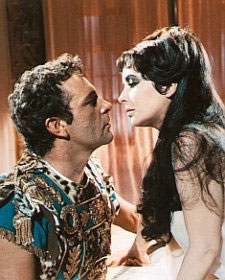
to Hollywood and Mankiewicz’s 1963 production. I’m
sure the author paid no attention to the movie. This
book provided an introduction to the
history of that period. Despite my
spirited defense of Schiff, it was difficult for me to go through the
writing,
more so than Vera, her bio of
Nabokov’s wife. I like her writing. However, she has no sense of humor, except
for the Casablanca allusion. A- Bob
S: I I think I am
not astute enough to compare this book – as it
is only my 2nd. It opened my
eyes to one of history’s luminous figures. I
thought the author went to a wealth of related primary
sources to make
the story detailed, where there was very little detail directly
relating to
Cleopatra. She wove it all in, created details, from first hand
sources where
available. Well done research effort,
but little humor. A- Joel: When
I started reading it, it took much longer
than I expected. I thought it was about
Alexandria, Minnesota, where my mail man is dove hunting this week. The inappropriate, snappy phrase did not
offend me – I grew up with a house full of women. From
an historical perspective, she reached a
reasonable compromise. A difficult read
for me, but then I may be slipping over the edge. The
backbiting that goes on now in politics,
I can see is no different over the past 2000 years – it kinda debunks my image
of the
media. Cleopatra was very complex, very
capable – the book brought out her strengths and her weaknesses. B+ Laborious read, but much information. Good look at 1st century BC. Dick
J: A lot of
information, based on secondary sources. No
indication that the author reads Greek or Latin. This
was a “Popular History.” I am a
rhetorician and she had it right about
oratory training. Overall, not sure how
much is history vs. fiction. Not an easy
read. I came away with a better sense of
ancient history. I never liked the
Elizabeth Taylor movie. I seem to recall
the review in the NY Times as not favorable. I
give the book a B+ Charlie: Not
sure, but the NY Times reviews I saw were mostly
favorable. Schiff did not see the
Elizabeth Taylor
movie. I’ve had a long interest in the
First
Century BC. Everywhere I had factual
knowledge of the period, there was no clash with this book. For Schiff’s Ben Franklin bio, she had 30,000
library/museum items to go through, even including receipts for his
bathing. Here I think she did as good a
job as possible – it was a good portrayal of life in Egypt and Italy. I wish she had been a bit more journalistic,
less
obscuring with literary artistry. A- |
War Trash by Ha Jin December 2011
| Nine former Nationalist Chinese prisoners
of war trudged through the snow of North East Albuquerque and gathered
in the solitary confinements of Stalgren Court. There they
debated the loss of Hitchens and how
the Book Club members could easily find themselves on the list of the World's
100 Top Public Intellectuals, simply by submitting the composite
Book Club IQ. They spoke of War Trash: |
|
Jack: I found the book interesting – it provided a perspective on a war about which I knew nothing. The style lacked passion. In spite of numerous unique instances, it got to be redundant. B Charlie: Unusual style; as a memoir, he wove humanity. Excellent – he took it from a pseudo-memoir to a novel. He described the evils of humanity – but his characters were imbued with humanity. I give it an A- for that – I was prepared not to like it. Rob: I give it a B, like Jack did. Before he was captured, I found the descriptions way too detached for the folks getting wiped out [in military actions]. I found it a bit of a trudge, not enough involvement. Dick: Because of my uncle, I am interested in the Korean War. I read Halberstam’s book [The Coldest Winter: America and the Korean War]. I appreciated this book because it allowed me to view the conflict from the other side. I didn’t want to like the book, but I learned a lot. A- Ken: I tend to agree, the writing was simple. I learned a lot about the Korean War. I enjoyed it for that reason – I am going with an A- Tom: I’m in Jack and Rob’s camp – the book was presented as a novel, and as a novel it didn’t work for me. Writing/speaking broken English (EASL) was too much for me. I never really connected with the main character – I was flabbergasted that the book won the PEN/Faulkner award. But any time a book encourages us to learn, that is a good thing. B- Keith: As an official memoir, it did a pratfall. Better examples are Robinson Crusoe and On the Road. Communication is so important to the POW. Juxtaposed with Vietnam, we recall the fighter pilots using a tapping code, quite similar yet much different. Too tedious. B- Ron B: (as an aside, we didn’t learn much about the Americans who fought in the war). This presented a different force mix. As to the book, I enjoyed reading it – I liked the anecdotal stories – I felt that the author was writing in character as a lower level Chinese officer, I was good to go with that. This could have been a TV series, with each chapter/incident a separate episode like MASH. These were stories he wanted to pass on. The writing was in character, provided an insight into the Chinese point of view. I was teetering between a B+ to A-; I’ll go with A-. I enjoyed reading it. Mike: First, I’d like to share with you this tattoo I have following my hip surgery – it reads FUCK JACK & ROB & TOM. I liked Ron’s interpretation, that the writing was as if a memoir written by a low-ranking Chinese officer. I found it fascinating, as I expected the memoir to be about, “Well, the rice had maggots in it today; the guards beat me unmercifully” and such mundane POW remembrances. Instead, the prisoners were always working on something. I was fascinated to find that the kidnapping of BGEN Bell was indeed based on a true situation in the POW camps in South Korea. The writing was certainly not Joseph Conrad, and it did indeed lack passion, yet I give the book an A- |
|
And from outside of
the compound: Dear
members, I can
not make it tonight, but give "War Trash" a B
rating based upon my conflicting opinion that
it is a well written book about a deplorable and depressing subject
that did
not leave me with any joy after having read it. I
can only think that
the whole population of North Korea is permanently stuck in a similar
situation
to the Chinese prisoners of war. I will be
interested to
see if its new younger, more western oriented leader will make a
difference in
the lives of the North Koreans in the future. Have a Happy New Years. See you in January. Sincerely, |
Caleb's Crossing by Geraldine Brooks January 2012
|
We thrive to survive and endure the harsh winter months. Within
the past sennight, nine former Coatmen and erstwhile sonquems got up
off
their shakedowns and gathered at the wetu of Solace Jensen to consider
the patents that slipped through their grasp over the past 400
years. They knew they must be both fettler and grave
digger. First feast, then famine. Then out on the flats
a'clammin'. For too long they had tended to their huswifery, or looked to develop some herb lore, as what other way could they learn? Too many had been sons like Makepeace, slow of wit, stinting in affection. So now they chose to gather and to sit with their precisian faith. As the dimmet deepened, they thought of those they left behind in England. Before their souls headed for the southwest, they chose to speak out, as one to another: |
|
Bob W: This book did not impress me. The characters seemed too modern. A woman did not have the latitude to do those things in that time. The author used archaic words, but the characters did not live in the time described. B Jack: I really enjoyed it. Well-written. The use of archaic words and expressions helped to reinforce the setting for me and to keep this reader in the 17th century. I learned a lot of the culture and the times. A- Mike: Rather than Caleb’s Crossing, this book should have been titled Bethia’s Broodings from the Buttery. Bethia means Servant and Bethia acted and reenacted this role throughout. The Cover Jacket promised a book on Caleb Cheeshahteaumuck, the first Native American to graduate from Harvard. Yet the story provided only a distant view of Caleb, a stick-drawing colored by the narrator Bethia Mayfield, herself a fictional daughter built upon the historical Mayhew ministerial family. In several chapters Caleb did not even make an entrance, but ol’ Bethia was there, getting into everything and everyone’s business. As supernatural as this book makes Caleb appear (he learns all of his English … and Latin … and Hebrew … and Greek – after passing puberty, and undergoes a most unlikely transition into a smooth talking Englishman in less than three years), it makes Bethia even more remarkable, Forrest Gump-like in her ability to appear in all crucial scenes. Bethia is everywhere, and after her father stops teaching her, keeps learning to surpass all the men with perhaps the exception of her protégé, Caleb. She gives Caleb his name, she makes Caleb into the scholar, although she has just a bit of a translation problem starting with A is for Apple and for Adam when he has no concept – (so is she speaking English here? Or explaining writing?). She speaks the last words into his ear, and he is immediately receptive. What a gal! This is feminism revised history and imagined heroics at its peak. And she lays on her foreshadowing with a shovel. Who claims that this style of writing is prize worthy? Not this thrall of Satan: C Ron: I give it an A. I liked the historical aspects; I was willing to suspend my disbelief. Good read. Keith: My bugaboo was the archaic words – many did not even appear in my dictionaries. Examples: sennight. This was a book of Good and Evil. The Puritans were the Good, and Tecumseh was Evil. The last sentence: “So, let these last pages be my death song – even if at the end it is no paean, but as it must be: a dissonant and tragical lament.” Lament: B Ken: I tend to agree with Jack and Ron – this was superb writing. Some negatives: not enough about Caleb, and I was not enchanted by the ending. A- Tom: Put quote marks around Ron’s remarks, and those could be mine. I read it as a novel, and as a novel it carried me along. I agree that the last sentence was not the best. Given the subsequent history of Native Americans in this country, the book really could not end on a high note. The first two-thirds of the book recalled to mind a novel by Jane Austen: a young woman making her way in the world through her own wits. This made it an A Rob: I started off not liking it. I felt it was an upscale Romance novel, written for her Martha’s Vineyard neighbors. However, in Chapter 5 she caught herself, and stated: “I must refrain from indulging in excesses of sensibility and flights of morbid imagination.” Her writing improved after that. One literary trick I don’t like is ending a chapter with a hint of who will die in the next chapter. I got more emotionally involved as I got into the drama. Strong B+ Dick: I was scared when I started reading this book – is it a turkey? Thank God it wasn’t! I have always had trouble understanding the Puritan mind, how it works. This book did that well. I would recommend it to others. A- |
| and
from off the island: I
really enjoyed Caleb's Crossing and give
it an A.
I felt engaged in the story rather than repulsed, even when so many sad
and terrible things were happening because the sad events seemed
to confirm the difficulty of life in that period of time and place.
I particularly enjoyed
the period syntax and idiomatic
language.
I can see how the book
merited the Pulitzer Prize.
I also enjoyed the
historical melieu; that period of
harmony between the early settlers inbued with Christian
compassion for the Indians, just before the Indians and settlers
realized that the settlers would take everything the indians had,
destroy their culture and kill them en masse.
I also found it interesting
that there was an unsuccessful
Indian revolt in Massachusetts in 1675, just five years before the
successful Indian revolt in New Mexico.
The author must have a
special relationship with Martha's
Vineyard because she writes so lovingly about it.
Sincerely,
Bob S
|
Winesburg, Ohio by Sherwood Anderson February 2012
| Jack
knew they were coming. Nine of them. He had made himself a
sling with rubber bands and a forked stick and went off by himself to
gather sugar nuts for the meeting. (He wanted to gather green
plums, but no, it was past time for that.) As he went about thoughts came to him. He realized that many of them were mildly mature and wondered what they would do in life, but before they came to anything, the thoughts passed and he was a boy again. He knew the meeting was to be held there in the streets of Placitasburg, there in the dark - would they know to take the exit from Cincinnati? Some of them seem confused. It all seemed such a difficult task. Jack sat down on a rock and thought. Jack thought some of them would flounder, some of them would succeed. If only he could tell which needed his spiritual guidance. A strange, dizzy feeling crept over him. Into his mind came a desire to tell them all something he had been determined not to tell. He was sure they would have much to say ... he could almost hear them speaking now ... |
|
Bob W: I have to admit, I didn’t understand how this came to be a Great Work of Art. The characters were two dimensional. They expressed emotions but I can’t understand what motivated them. It reminded me of the Iliad – lots of Greeks in action but little motivation for the action. The book shows what life is like in small town America at the turn of the century. I give it a C+ <>Mike: Well, I’ll be starched. When a writer presents us with a collection of short stories, the reader must re-orient himself with each one: different characters, setting, theme. Here in Winesburg, Ohio we have vignettes of the townspeople, and we already have learned the town, the time, and even the theme. We are told up front that all these folks are grotesques – and that it means they have seized on one possible truth as the truth, to the detriment of all others. Anderson tells of his inspiration in the dedication to his mother Emma: “whose keen observations on the life about her awoke in me the hunger to see beneath the surface of lives…”Overall, the writing is a little dated but the human truths come through. Example of dated: Tom Foster ‘thinking thoughts that he tried to put into words. He said that Helen White was a flame dancing in the air and that he was a little tree without leaves standing out sharply against the sky.” Dumb, at least today. I like what he did with the town and the stories. He provided great views of small towns, people and fairs and affairs. How about this for sneaking in a hint of a lurid past: “At eighteen life had so gripped Elizabeth that she was no longer a virgin.” Love it! People in these stories are forever stamping their feet or going for lonely walks at night. Is one truth the meaninglessness of Life? A- Tom: I thought we covered a lot of my opinions on the book. I was dismayed with all these characters – yet he pulled me along. When you have read all of these stories, you are caught up in a mood – powerful writing. B+ Charlie: B. clever construction, well written. Reminds me of the actress where the reviewer said she could cover the gamut of emotions from A to B. He could have written better. B Joel: Reminded me of the reason my wife hates Prairie Home Companion – she’s lived there. She calls Garrison Keilor “The Prince of Mediocrity.” In a small town, you know these people, living their lives of quiet desperation. We were glad to escape to Albuquerque. B+ Ron: My home town Elyria was mentioned in the intro. I found the book interesting, I enjoyed reading it. I didn’t understand all the literary style, but the book is 100 years old. I will give it a B+ and would recommend it. I found it surprisingly modern. Bob S:
Something Joel said: Truthfulness
to its place and people. Reminded me of Carl
Sandburg and Gary Cartwright. The
latter was once asked why he came back to Texas. His
answer: “It’s the place where I iunderstand
the sons
of bitches.” I now can see Anderson is a
transitional wiriter of the 1800s to the
1900s. Like Jack Keroac,
he is just writing about they people they
knew Even though he has depressing
persons, his
literary skills are there: B+ Keith: A great challenge in physics is dark energy and dark matter. Now we know the origin of both. C Most gargantuan depressing, which I have summed up in a short refrain: The Dark Energy of Winesburg Those calling Winesburg
their home This sullen small town, down in
its dives Two themes dominate – the first: actions unrequited.
Grim and gloomy, melancholy too Relationships are sad,
indeed
morose Only George Willard showed life, sparks and insight Jack: I guess my Irish and German heritage draws me to sad stories. I was drawn to this novel, because my roots are in that part of the country. I was not disappointed. I really enjoyed almost every story. I was taken in by Anderson’s ability to depict how lonely people can become within a community. His characters seem prodded by a hunger they cannot define. All of them yearn for a sense of belonging. They wander about in the darkness reaching out for companionship and love. I sympathized with all of them. I believe Anderson understood that these examples of the human condition can be obscured in a large city, but they are magnified in a small town. I also liked Anderson’s prose and the way he used uncomplicated sentences and simple vocabulary to describe rather complex situations and emotional states. A- |
|
And
as telegraphed in from on down the railway line:
I grew up in a town of about 400 people in rural Eastern Utah. Although my youth was spent many miles from Ohio and several decades after this book was written, I could still recognize similar characters in my home town. I even began identifying characters in my home town with those in the book. I think Anderson did a great job of capturing the feelings
of people in small towns. Those people are often trapped in their
lives and they have little intellectual or personal
inspiration. There are many lonely people and people
who are simply strange. Amazingly, the strange ones are often
accepted as an integral part of the community--at least that is true in
Spring Glen, Utah--my home town.
The book is really a loosely connected novel in which
George Willard is the central character. George is seen as
someone with unique skills and insights so people seek him out.
Because he is a person with skills, it is almost inevitable that he
will leave the town. If not, he will become bitter like many
of the other characters.
I found all of the characters to be believable, though some
are more developed than others.
It would be easy to begin to think that all people in small
towns are miserable, wierd, or crazy. I am sure that there were
many happy, contented people in Winesburg. Anderson did not focus
on them but only on those on the outside of the community. The
happy people would be far less interesting, I guess.
We also discover that people in small towns are deeply
concerned about sex and religion. In that time people walked
about together. In our generation, they spent time in the back
seats of cars. In my home town, the people (Mormons, Catholics,
and Protestants) were all caught up in religion and were often
intolerant of those who did not agree with their beliefs.
I have the book on my Kindle. The edition I received
had an introduction by Irving Howe. Howe talked about the clarity
of Anderson's writing--that it was simple and straight-forward. I
don't quite agree. At first I found the writing awkward and full
of clauses that broke the flow. As I read on, I got used to the
style and found it easy to read.
This is an interesting book but not a great book. I
think Jack made an excellent choice--this book should lead to an
excellent discussion and I am sure some interesting stories from
members of the group. I would give it a B+.
Say hello to everyone and I will see you next
month.
Dick
Jack -- Sorry I can't make it to Winesville on the Rio Grande for the meeting. My comments. We've done morbid, so I guess we were due for grotesque. Winesville sure ain't Mayberry. Can't say how it compares with Tonkawa, OK. Nobody told me. I had a couple of old maid HS teachers who might have had secret lives a la Alice, in her Adventure. But, my impression of small midwest/southwest towns is that people try to avoid looking weird, or eccentric -- they camouflage their grotesqueness, rather than display it or tell it to the local reporter. Several of the stories gripped me, but the doom and gloom wore on me as I worked my way to George's departure. I liked the linkage of the stories; I liked the way Anderson told them, in some cases being a little vague about how they worked out, but fascinating all the same - and food for thought. The writing was great. The stories had a very modern feel to me - the grotesqueness, the gloom, the fact that nobody seemed to be happy. Summary: B+ Rob |
The Good Soldier by Ford Madox Ford March 2012
| The ten of us had just arrived at Nauheim for the season. It was Thursday evening around 7 pm - as I recall, the last Thursday of the month. As I looked around the dining room, I heard Leonora call out, "Let's sit by these good people over here." I tried to explain to her that she could not sit there, as this area was for Book Club members only. Even my sweet Florence could not sit with us - but then she was dead. The good soldier Ferrell was Down Under as well. And all I heard from Nancy was "Shuttlecocks! Shuttlecocks!" However there would be more dessert for the readers remaining, and I knew it would not be so sad. They all had something to say: |
|
Rob: I got a late start on this book, and only completed about 1/3 or ¼ of it. I was intrigued by what I read: upper crust England (preparing us for P.G. Wodehouse selection later this year). Heavy foreboding. I am not in a position yet to assign a grade. Tom: I liked this book a lot – the use of language was excellent. I liked the structure after I got into it – “the girl” was mentioned early, as was “the Kilsyte affair” – Later I came to appreciate the structure. A With selections like this and Caleb’s Crossing, I think the Club is on a roll! Ken: I will start by saying, I blasted through the book. I was working my taxes, and when my anger got high, I would switch over to reading the book. Given the discussion, I may have missed some of the deepness. I had no time to read it carefully. So from a quick read, I found a clueless, soulless narrator; a soap opera of upper British class characters. I came away with not a great feeling about the book. I’d give it B- Ron B: I had a difficult time with this book. The literary style was not easy for me to read. I tried reading it slower, and then I fell asleep. It didn’t hold my personal attention. I did find the humor to be dry and droll. On the whole, too difficult to read. C Dick J: I found the narrator irritating, which colored my view of the book. It seemed to get better as it went on. The author would meander as you went, and I made a note to him: “Get the hell to the point!” The book is one I think a reader would either really like or dislike. The narrator is very content with his life – then his wife kills herself, Edward kills himself. He should be content, as he flourishes. I found him not very interesting. This is a view of a class at a specific time of history. The men were pathetic; only Leonora had strength. B. I wasn’t excited by the book. Mike: I enjoyed the narrator’s semi-unpredictable, often irreverent rambling style of telling the story, actually several stories. I had a sense of Lolita, in that the narrator took you along his own path, regardless of what ‘the truth’ might be, you journeyed with him. I wonder if Nabokov had read this book, and took the idea of the young Nancy as a young object to be desired, one step farther. It also made me think of The Debt to Pleasure by John Lanchester, which we read in 2004 and has been compared to Lolita in its rambling style by an unreliable narrator – and it had homicides at the end. Like Lolita, this book bears reading more than once, so you can see how the author, through the narrator, obfuscated some of the truths, or provided half-truths, or just foreshadowing that is not quite obvious at first. The Debt to Pleasure also displayed a sense of humor, which I got from John Dowell of Philadelphia, our unreliable narrator, as well. Overall grade: A- Keith: This book came out the same year as the Titanic sank. It was verbose and rambling. Like watching a glacier move. Nancy was the one chance for interest, but she “lived sadly.” One word near the end: pococurante (indifference and nonchalance) wraps it up. Nothing special. C Charlie: There appear to be two groups about this book: Like or Not like. I didn’t like it. I wasn’t working taxes, but I was on vacation. I thought the characters were dull, uninteresting. They had too much idle time and occasionally they would screw one another and get into trouble. Gloomy and depressing. C Too many words (could have been half the pages). Bob S. I put this book in the category of Conrad’s Lord Jim, which I couldn’t get past the first 80 pages – yet my commitment to the Group forced me on. It does strike me on several different levels. To have a seemingly accurate narrator who seems to be transparent (just reporting, like a journalist). The thought I had was that I must read The Great Gatsby – for this era, and the foibles of the rich. I even saw Albert Camus in this. I like books that engage me (e.g., Caleb’s Crossing) so my sense is this is a B- I saw that from a historical perspective it had significance, but it was not engaging for me. Bob W.: This is probably my favorite novel. I have read it three times or more. Communication to me is fascinating, as people go off in different directions, all thinking they understand the others. This book explores that a group of people can be so incommunicative. The author’s control of English is excellent; and his control of time, going back and forth, he keeps control of everything. A |
| And
from Down Under: The Good Soldier is the saddest story I have ever heard. FMF should have held on to his original family name. If the story had been any more grotesque or morose or the narrator been more melancholy, we certainly would have had a good German novel and perhaps even a Kafkaesque tale and for that reason alone I would give it an above average score. C+ Greetings from Abel Tasman National Park in New Zealand. Would love to have been a part of the discussion. Regards, Jack |
Peace Like A River by Leif Enger April 2012 (meeting on 3 May)
|
Nine
erstwhile desperados saddled up and headed toward the Loma Linda
Ranchero. They heard of the parallel of
the miracles in
the Gospels with those in Peace Like A
River. They brought up the origin of
Sunny Sundown, as Leif’s toddler approached him and asked if he had any
cowboys
in that story he was writing. They
compared Swede to Scout, and Israel to Atticus. Once past
the badlands, a couple of the bueno huevos spoke up: |
|
Mike: I haven’t
enjoyed a book this much since The
Yiddish Policemen’s Union. Clever
writing, good sense of humor. The
narrator somehow had you viewing the story through Reuben’s young eyes,
even
though Reuben had to be past a quarter century. I
had no misgivings about plot contrivance; he
would offer up a humble self as witness,
and almost shrug it off with “Make of that
what you will.” A clever phrase or twist
of plot – e.g., “And the girl is Sarah,.” he added - on almost every
page. Didn’t like the wrap-up that much,
but as
Swede said, most authors tend to drift during the epilogue. A Keith: Well
told: the lead-up to the crime, the
search for Davy, the almost new-age ending. The
book had a linchpin of miracles. How often
do you encounter a linchpin of miracles? And
he did it all with no obscenities, no sex
scenes. A Jack: I think Enger
is a great story teller. His prose is
filled with unusual metaphors and analogies, excellent use of language. I enjoyed the story.
Only drawback: not the
miracles or the dream scenes – some of the expanded tales did
not seem relevant to the main story line. A- Dick: I
thought I
had read this book before, but when I got into, I found myself saying,
"Damn! This is good! Really
good!" I don’t know how long before this
becomes a classic. I wanted to know:
what was Swede’s real
name? A- Bob S: I am not that
familiar with the grading scheme and I want to leave some room for
other books
to be better. A- Charlie: I
thought it
was wonderful also – he captured the Minnesota childhood – hard to
remember
when I’ve enjoyed a book more. A Ken: I give it an A-
I didn’t like the ending, and too many
miracles. The writing was charming. Example (from
page 271, paragraph 4) Swede telling
the horrific story of some troop of outcasts driven to self cannibalism: smacking their lips, “yet making no
nutritional gain. “ Rob: I agree that
this is one of the best books we’ve read. Captivating
and charming. I
like
those twists on practically every page. One
image: “eyes were
dust-bowl
flat.” Also when Walzer told Reuben,
“Don’t wet your pants.” –‘up until then I hadn’t considered it as a
possibility
…’ A Ron: I picked
this book because I had read it and liked it. I
thought the writing could stand on its own. Not
preachy. Enjoyed the story-telling aspects. Nature was a force but respected.
That time they were stuck in the house.
I liked the characters and the humorous narration. Swede was too young for what she
accomplished, but I decided to accept that. Solid
A. |
I will be away this Thursday and will miss the meeting. Have not yet finished the book -- got my usual late start. Plan to finish it on my trip and then start Ken's monster tome! So far I like it a lot -- excellent writing, compelling story and I love the humor. I'm not sure yet how I feel about the supernatural stuff, if it adds to the story or not. I remember concluding that "Beloved" would have been better without it, whereas it was integral and essential in "Shoeless Joe" (the book 'Field of Dreams' was based on). I'll be interested to see what everyone else thinks. A or A- so far. See you next month. Tom |
The Warmth of Other Suns by Isabel Wilkerson May 2012
| Eight
erstwhile fruitpickers migrated North to Sandia Heights on the
Tarnished
Streak Express to tell tales of their youth to rival The Warmth of
Other Suns. They
learned
that Isabel Wilkerson was the Chicago Bureau chief for the New York
Times, and took several years to compile and write this
book, interviewing 1200 individuals. The
book has been criticized for no reference to such segregation icons as
water
fountains, but it does discuss restaurant discrimination several times,
to
include ‘breaking the glass’ from which Dr. Foster had drunk. Just prior to the Host breaking their
dessert plates, the immigrants offered these
opinions: |
|
Bob S: I thought it was
great. In Vancouver, there is deference
made to “First
Natives.” I realize now that the
unspoken theme was that we are all immigrants. The
book was well done. A- Ron B:
I have a startling and humbling admission.
I did not read the book. However,
I did read an earlier choice of Ken’s, The Poisonwood Bible,
also of length > 500 pages, and that
is an A book. Joel N: I
thought it was an interesting book. I had
the feeling it was written by a journalist before I
knew the background on
the author. It was written in real
time. We need to be reminded about tragic
historical
events such as lynchings. B+ Mike: Reading
the first 60 to 70 to 80 pages, I was entranced
with this book. This is great! Now I wish it were 100 pages longer! However … as I got more into it, I felt
a
growing irritation as to how the author was treating me.
My primary irritation: I thought the theme of the
book was to be The Great Migration. Yet it
should be more properly subtitled: “Three
Soap Operas of Colored Folk in America.” She
covers these characters from infancy to death, and
admits that the
migration was only a small portion of their lives.
And away she goes, apparently with the idea that any
anecdote that was orally captured deserves print ...e.g., the
story of the watermelon flopping around
inside the luggage box? Come on! The writing is more than adequate, and I
really like the way she does the dialects, more so than Mark Twain. However, she spent 500 pages mostly defending
the lives of
three minor characters. As
Charlie opined, the author massaged the facts. I cannot
recommend this book to others. C+ Dick J: My
wife does meditation with a group, and the group is
reading this
book. Her discussion was similar to
ours. I didn’t like Dr. Foster. I got tired of reading the book at about 400
pages. It started brilliantly. The editors didn’t do their jobs.
I read many books on the black movement.
This book happened to come along at the
perfect time. B+ Charlie: You
mentioned that Dr. Foster’s trip was not heroic. I
would say heroic is going north in a
casket. The book was way too long by at least 250 pages.
It should have been written more in a
journalistic style. The author gave her
opinion, not just rigorous facts. I
wouldn’t recommend it. B- Tom: I
got confused and read A River
Runs Through It … again. Wilkerson's
book,
however, was an A- in my mind; largely if not entirely because of the
information it gave me. For me, I
learned a lot about this historical period of which I knew nothing. The writing was a strange mix of journalism
and historical information. The stories
kept me interested. However, her writing
pales in
comparison to Stacey Schiff’s Cleopatra.
A- Ken: I
tend to agree with Tom. Not coming
from the South, I found the book educational and hard to put down,
albeit a bit long-winded. I found the author’s
descriptions of various research studies that often contradict
prevailing doctrines to be especially
interesting. A- |
| ...
and from just beyond the Mason-Dixon line: Dear Ken, We're leaving in our camper on Monday for two months, so I won't be able to attend the LTBC meeting at your house on the 31st, but I read day and night to get through this month's selection and offer the following: I found The Warmth of Other Suns very informative. It is indeed a tragic tale, but I think well written. Wilkerson's decision to relate the history of the migration of Southern blacks through the eyes and experiences of three very different individuals brought that period of our country's history to life and made it more personal and compelling to me. I would suggest it become required reading in all high schools. It could have been a bit shorter, however. A- Regards, Jack I took The Tuzigoot Streak west to Las Vegas and will not be back for the May 31 meeting. Twin grandsons emerge tomorrow. In case anybody is wondering, I will not be sending an opus report. Have a great meeting at Big George's, whoever that is. Rob Mike..will miss 31 May soiree...sun book tuned to academician..lack of concision crippled my interest..50% cut still delivers essence...too bad...my grade- B minus..keith |
The Heart is a Lonely Hunter by Carson McCullers June 2012
|
||||
|
Tom: I was very pleasantly surprised – the book
held my interest throughout. All the
characters
carried a level of interest for me. I
thought it was a little preachy at times (e.g., Marx and race), but it
fit the
characters she had developed. The writing
was not beautiful, but effective. A Dick: Tom provided a superb analysis.
I was interested in the tension between
people. I grew up in a small town and I
enjoyed the book immensely. A- Mike: This book reminded me of Winesburg,
Ohio but rather than a reporter’s interviewing the main
characters, which created a collection of short stories, McCullers used
two
vehicles to intertwine her characters: Singer,
the mute who they sought out, and The New York
Café, which was
the second gathering place, even for the mute. The
author continued to surprise me throughout the book –
I did not
expect the sexual interaction between 14-year old Mick and Harry (which
the
author handled so adroitly), the shooting of Baby Wilson, Willie’s legs
being
sawed off, and the suicide of Singer. A- Rob: I started
out being interested in the characters and the setting and the issues,
but as things got stranger and more depressing, I lost interest:
Mick's prom party, the three mutes fiasco, the shooting of Baby, the
nightly parade of people to Singer's room, ..., Singer's suicide.
I felt the author overdid the misery and angst (and all those downer
characteristics Keith lists) and thereby lost touch with reality, even
in the South 70-some years ago. Grapes of Wrath starkly
depicts the misery of about the same time, but still leaves with me
some hope for the characters. Not here. I don't know if the
author accurately captured reality at the time, but my suspicion is
that she magnified the negatives, minimized the positives. She
did a good job of establishing an atmosphere and narrative that fit her
lonely-hunter theme, but I still did not find it to be a convincing or
satisfying book. B- Keith: The book was a tombstone:
saturnine, lugubrious, miasmic. The
author is a dim writer of despair. None of
her characters could rise above the
despair. Not a mini-scintilla of
hope. (Rob: “I wish I’d
said that!"). History will relegate her to
racial ruminations. Significant by a
scoche. C- Charlie: Well, I enjoyed it. (laughter
from troops). What
impressed me was it was written by a 23 year old. Dark
tone, but the Late Depression years were
depressing! She provided insights into
Black Culture. Very good.
A- Ken: I thought the book was definitely worth the
read, although it was quite depressing. She
did a good job of developing the characters. Her
writing was at times sophomoric, not
great writing. I give it a B+ to A- (the
latter awarded on quantity of ice cream
presented.) Bob
S: Like Charlie, I
was impressed by the relationships and personalities of the characters. She seems to have insight into Black
Culture. Only Warmth of Other
Suns gave me some insight into this; yet McCullers
got it in 1937 – unbelievable! Even
the
countryside description was good. A
significant work of art – I give it an A. |
||||
| and from just outside the Deep
South: Mike et al, I will be unable to attend the meeting on July 5, since we will be on our annual trek to El Paso del Norte. I hope that the temperature will not melt lead, as usual. Heart is a Lonely Hunter is fun to read. I don't know if I read right well but I read pretty good without moving my lips too much. I am sorry to miss the July 5 meeting, but management has scheduled otherwise. I enjoyed "Heart..Hunter"; very well written, and an apparently accurate picture of a southern mill town during the depression (which lasted a long time; my daughter lives in Greenville SC where the mills were the primary employers, until they opened up the BMW plant and the GE turbine factory). As I mentioned, this was extremely good writing, better than I could do at 23,or at 123. I would give it an A minus. Joel Dear Tom, Greetings from Cape Cod where hearts are not lonely hunters. Won't be able to make your meeting next week--hope to be on the shores of Brackett Lake in northern Maine by then--so here are my comments: Carson McCullers' The Heart Is a Lonely Hunter is not a novel I will easily forget. I found her prose exceptional and the story line suspenseful and troubling. I concluded that the isolation and hopelessness felt by the characters must be functions of the location and the times. I thought it was a very depressing story. Even Mick seemed to get locked into a situation that would not let her realize her dreams. In spite of that, I would recommend it and give it an A. Regards, Jack Fellow Lonely Hearts--
Sorry I will miss the meeting, I'll be in Ohio, not far from
Winesburg.
The book reminded me a lot of Winesburg, but set in the
South. I was facinated by all of the characters and the way their
stories intertwined. I thought the writing was good and remarkable for
an author who was about 20 at the time. A good read....A.
Ron
|
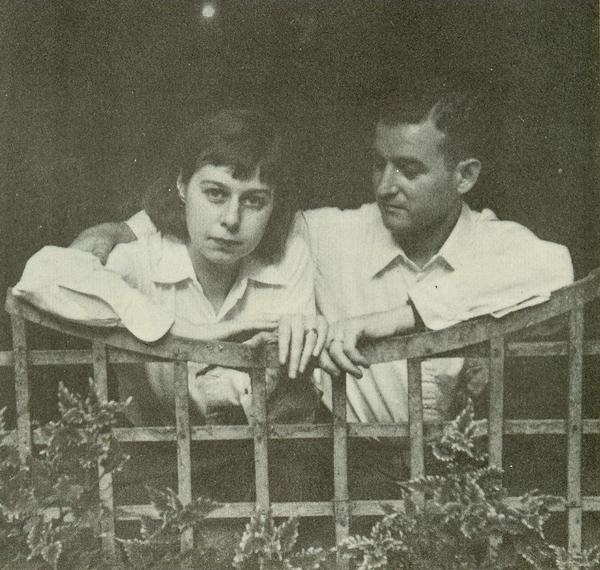
Right Ho, Jeeves! by P. G. Wodehouse July 2012
|
“Jeeves, are we not expecting the Drones to gather here for the Quorn at Lick-Spittle Manor in Cedar Crest?” “Indeed, sir.” "And Profs. Ferrell, Gillen, and Nash will not be joining us?" "Unfortunately
not tonight, sir. They are on travel, it appears." “Yes, well... Won’t we need the key from Seppings, or perhaps the code to get through the gate?” “Indubitably, sir.” “Propinquity, Jeeves. Propinquity, in my opinion, is what will do the trick.” “Very good, sir.” "Right,
Ho! Well, then, let's see what the old school chaps have to
say ... " |
|
Bob S.: I
enjoyed it – I give it a B. Clever
repertoire, not much more that excited me. Well
written, not Evelyn Waugh or H.H. Monroe, but a well
written set
piece around which [Wodehouse] created humor. B Tom: This
was to be an A- as I liked it so much. I
thoroughly enjoyed it, could listen to
Bertie speak all night, putting a sentence together.
The book was funny from first to last, it
gets an A. Ron B: I
enjoyed the writing and laughed out loud. The
sum, however, was not the whole of its
parts. The plot did not engage me. B Charlie: I
agree with Bob’s assessment. This was not
a monument to English culture, but enjoyable,
not great
literature. B+ Mike: I
have often heard of “light summer reading” and I’m so
glad Rob
assigned us some. I was worried when Rob
announced he picked Wodehouse because he was a favorite of Christopher
Hitchens, for although I think Hitch to be one of the smartest debaters
of our
time, his sense of humor (as displayed as a young man in his
autobiography) is
sophomoric at times, e.g.: great novels
that never made it: “A Tale of
Three Cities.” Yet P.G. delighted me
throughout the book,
often with a unique approach to both wordplay and character degradation. Wonderful! Ah,
but “Right Ho” did have a
few plot contrivances … A- Bob Woods:
This has to be taken in context. There
is a whole field of British humor. This
was about a B+ A set piece. Keith: I
found it light-hearted, titillating, and stimulating.
I appreciated the 18-mile round trip for
Bertie. Delightful – solid A. Dick J: This
was the second Jeeves
novel I’ve read. I liked it, laughed out
loud. This was not great literature, and
I put it in the B
category. Rob: This
was the first Jeeves book
I read, and I thoroughly enjoyed it. I
laughed practically on every page. Loved
it. A- |
| And
from well outside Brinkley Court: We're still in New England--one of the few cool spots in the nation. Won't get back to New Mexico until next month, so I won't be able to make the LTBC meeting at your house next week. Would love to join in the discussion. My comments follow: What a hoot! Thank you, Rob, for providing us a welcomed form of comic relief to the heavier works we had read so far this year. I can see how Wodehouse's over-the-edige eccentric characters and almost exclusive use of dialog made it a natural for a BBC sitcom. Not great literature, but lots of fun. A Regards, Jack As mentioned at the last meeting, my wife and I are headed off to Europe and so I won't make the July meeting. I tried to buy a copy of Right HO Jeeves before leaving but nobody had it so I will have to read it when I get back. Ken |
The Loved One by Evelyn Waugh August 2012
|
Eleven
Waiting Ones gathered in The Poets
Corner to pay
homage to Aimée Thanatogenos, struck down much too early in her
promising field
as a career crematorium cosmetologist. We
learned that Evelyn Waugh was not the nicest guy you’ve
ever shared a
beer with – pugnacious, a bully at school, he lost his scholarship at
Oxford
after joining The Hypocrites, and perhaps engaging in too much drinking
and
dabbling in homosexuality. Then Evelyn
married a woman by the name of Evelyn – and for a while they were known
as
Evelyn-he and Evelyn-she. That marriage
only lasted from 1928-1929. Meanwhile,
the Waiting Ones could wait no more: |
|
Ron
B.: I found the book
in Large Print and it was only 146 pages. I thought the story
line was
interesting, clever phrases, and I like the way he wrote.
None of the characters was the least bit
sympathetic, so I would infer he himself is not. This
was not constructed as a romance, as it
lacked in humanity. But it was well
written, held my interest. B+ Bob
Simon: I also give it a B+
I found it diverting and entertaining, if not great literature. Good summer diversion. Joel: I agree. I had
settled on a B+ before anyone else said their grade. Ken
G: I despised the
first part of the book. Only my
assignment from the Book Club kept me going, and I’m glad I continued. The author comically attacked American
marketing. B+ Perhaps
the best part was sending the endless yearly reminder, “Your little
Aimée is
wagging her tail in heaven for you today.” Tom
Genoni: The book made me
think of The Day of the Locusts, so I
dug out my copy of that Book Club selection. The
author did a great job of capturing Hollywood in a
short time. A- I found
myself disappointed when it ended. Bob
Woods: I give it a B. Waugh was fooling around, his heart was not
in it. Brideshead Revisited
is far better. Keith: Stygian River float through life. But even a river has life. I enjoyed the Black Humor. None of the characters would get in on the perverse way. A Jack Ferrell. I enjoy satire so I liked it. The story would be a tragedy if it wasn't so funny. But I’ve already shot my wad for A's and A-'s, so I give it a B+ Dick Jensen: I did not particularly like the characters. I liked the book from last month better. B Mike: I did not know what to expect from Waugh, yet I was disappointed. I thought P.G. Wodehouse was really clever, funny, laugh out loud – not here. Perhaps I have become jaded by so many CSI shows, medical examiners, TV news, that the book was not at all shocking to me, and didn’t appear as a classic, although I realize they made somewhat of a classic movie from the book. B Charlie: I’m with the B+ crowd. It was funny, but the
book from last month
was more clever. The movie is absolutely
wonderful - more characters than in the
book, just an extension of the book. |
|
and from the Happier Hunting Grounds: Hi, Charlie -- Sorry I won't be at the meeting tonight. My review: For me, the book was more cringe-inducing than a source of laughs or smiles - it wasn't "outrageously comic," as the back cover of my copy claimed. Suicide is just not that funny, even in black humor. I admit, though, that I got a kick from Barlow's Ode to Francis Henley ("pickled in formaldehyde and painted like a whore"), p. 85 in my book. But, after that, it was just grim. The book wasn't so much of a send-up of the funeral industry, Hollywood style, as a tale of a bunch of unpleasant people driving a vulnerable girl to suicide. Yuck-yuck. B- Sorry to be a wet blanket, but them's my reactions. - Rob |
The Art of Fielding by Chad Harbach September 2012
| The Westish baseball team traveled to an away game at Albuquerque. First pitch was thrown out at 7 pm. Four starters have been declared academically ineligible and thus the resulting lineup is asked to send in their scorecards following the game. Coach Gilbert will be in charge. Academically ineligible for one game unless otherwise marked: Blackledge (2 games; traded to Nebraska and to Fredericksburg); Genoni (traded to San Fran); Easterling (sent to the Midwest); Ferrell (2 games, sent to European League and traded for two Muslims to be martyred later). |
| Dick J:
I am probably the only member of the group who can say that I read
The Art of Fielding
twice. Right after it came out I read a
glowing review in the New York Times Book Review so I put a hold on the
book at the library and got it soon after it came out. I liked
some of the parts and did not like
others.
I then had the opportunity of reading it a second time thanks to Keith's selection
for our august group. I think I actually liked it a bit better
the second time but still had some serious reservations:
I think this could be a good movie. I hope
someone makes it into one.
This book seemed to have such promise but it just does
not achieve its promise. It has some good parts and some good
writing but in the end it is disappointing. B-
Ken: A reasonably readable book but a bit long-winded by 100 pages or more. I found Affenlight’s later-life crush and pursuit of Owen hard to believe. The authors name dropping of famous authors and books both rankles me and reminds me of my own shortcomings. Some of the writing was excellent but many passages were much less than impressive. Overall grade: B Ron B: The Art of Fielding has an interesting story line but wanders around a great deal. The characters should have been more developed considering this was 512 pages long. Affenlight was unconvincing as a college president. There were some spots of good writing, but they were few and far between. I was not surprised to learn that it took 11 years to write this book. I give it a B. Bob S: I found the book difficult to read, because it seemed to be written unevenly. Some characters were well developed like the heroine and Schwartz, but others were not, like the sister Also, some descriptions were lovely, while many others were not as fluid and I did not like the references to art and artists and other academic references that seemed to distract from the concept of a book on baseball. My main objection was the lack of
strategic focus of the President
(Albright?) on his relationship with Owen. If anything,
I would believe that a college president would be strategic in his
thinking and understand the options that he had to choose from.
The obvious solution to his infatuation with Owen was to take a
sabbatical from Westish? college and live with Owen in Japan for
the year of his fellowship and if that worked
out to move and live with Owen in San Francisco, New York or back
in Boston, where they would be welcomed. Not to go nuts over
someone and ruin your career and die. It seemed like an unlikely
plot choice to get to the conclusion of the
book.
I gave the book a B.
Keith:
Methinks baseball's a blue collar
game,
And that in no way causes it shame. It's spittin', dust kickin', and cussin' the calls, And fartin' and burpin', then pullin' your balls. Long days on the road, long nites dating boredom, Drinkin' booze, chasin' skirts, and dreamin' of stardom Now, along from Harvard comes this highfullutin' Harbach, His blood - quite blue, yet no blue on his back. He waxes poetic that baseball's high art, Methink this visual's dead from the start...! Indeed, his haute descriptions seem rather queer, Sorta like sewing a silk tie on a pig's ear...! So Chad, please, let baseball stay blowsy and blue With its warts, mud and farts..yet American True !! |
| And from outside the base paths: -- Sorry I won't be at this month's meeting. We'll be Tuzigooting across the Midwest. I had mixed emotions about this book. I liked the inside baseball stuff - Aparicio Rodriguez's wisdom on playing shortstop (though that name is a little far-fetched, as were several others), etc. Early on I was annoyed by the first-time author's strained efforts at describing simple things. E.g., "Shreds of cloud blew past the setting sun, causing shadows to scurry rodentially [!] over the grass." p. 61. "Henry parsed the word into sounds so small their sense disappeared, as if he'd wandered into the wide spaces that separate the solid parts of a molecule." p. 74. [What in the world does this mean? Does it help us understand how Henry pronounced April and does it matter?] "(Genevieve's) legs, ... flashed in sensual arcs like polished Brancusi birds." p. 187. [I had no urge to look up these birds, but I got the picture.] And many more. However, this sort of wretched excess seemed to diminish as the book went on, or else my senses were numbed to the extent that I was able to slide over such writing without pausing between the parts of the molecules. In the last part of the book I was caught up in the Harpooners unlikely tournament winning streak. I kept wondering if we would get a hokey storybook ending or an expected loss, but I didn't think the author tipped his hand. At the end, I even believed Henry could run the bases the way he did with a concussion. I did think, though, that the heart attack was too easy a way to rid ourselves of the sleazy college president. Well, I see that this review, somewhat like the book, has run on too long, so I'll stop. I was impressed, Keith, that you, who have so often skewered books for having too many pages between beginning and end, would pick a 500-page book. That was as brave as .... (supply your own Harbachism here). The book kept me entertained and I kept reading with beaverlike anticipation to see how it ended (without skipping to the end), so I'll score it a B. If only the Dodgers were showing Harpoonerlike zeal about winning some games this month. They need a Schwartz to inspire them. - Rob (Incidentally, I'd be interested to know if any LTBCer is a subscriber to n + 1, or a follower of its website.) Keith: Sorry I won't be able to attend the LTBC meeting at your house next week. Would have enjoyed participating in the discussion. Here are my comments: I enjoyed reading Chad Harbach's The Art of Fielding. It was easy to read and Harbach did a good job weaving the stories of the five major characters together. I found the character of Mike Schwartz the most engaging. I thought his selfless commitment to Henry and to the team was noteworthy. On the other hand, I found Guert Affenlight somewhat unbelievable and I became uncomfortable reading the sections describing the affair between him and Owen Dunne. My homophobic friends would probably not want to read it, but I would recommend it to anyone else. What about those Germanic family names (Affenlight, Arsch, Schwartz, Skrimshander, Starblind)? Only in the Upper Midwest, eh? A Regards, Jack Throughout the first half of The Art of Fielding, I was haunted by the image of Jimmy Dugan, the alcoholic manager played by Tom Hanks in A League of Their Own, rising up, and yelling, “Homos? There’s no homos in baseball!” Well, apparently there are, and they appear to dominate the schoolmaster in what started as a good sports story in The Art of Fielding. It starts as a homage perhaps to Zen and the Art of Motorcycle Maintenance, with several excerpts out of the apparently 212 such aphorisms of Aparicio Rodriquez’ book. Aparicio is not only the greatest shortstop to ever play the game, but he also wields the English language so much better than the average Puerto Rican ballplayer. This guy was good! Besides the Zen, I liked the short chapters which kept the story moving … however … I was sure each chapter would start with a quote from “The Art” - However, for whatever reason, Harbach drops the book after the first two chapters, and does not pick it up again for some 300 pages. By then, we’re knee-deep in beer, puke, the worst of D-III athletics, and an embarrassing school president who suddenly finds a love affair with a new student even though he has lived his first 61 years as a straight and an academic. What happened? What happened to me as a reader is that Harbach turned me off on several levels: I could not tolerate “freshperson” – has anyone seen that used on a campus? Even women’s basketball has accepted “man-on-man defense” so why freshperson is introduced in the 21st century with no rationale is beyond me. And names like Rich O’Shea! And Opentoe College? And when Owen introduces himself to Henry with “Hi, I’m your gay mulatto roommate,” I knew we were in for a sodomizing social experience. I also cringed at the plot contrivance. How big is a baseball? How big is Owen’s face? Yet on the first errant throw that Henry has ever made in his life, Object A hits Object B? And Object B happens to be the only human not watching the game? Too much! (Full disclosure: I usually read a book during the Lady Lobos basketball games … but only during the timeouts! I haven't been hit yet - with a much larger ball ....) And for some reason Pella comes to the dorm room and fornicates with Henry, right after he quits the team – did that play well? Not for me … I could go on and on, but 400 pages more than captures this book. Let’s stop with the team going to Nationals and award The Art with a solid C for Chad. Someone should have listened to the spirit of Jimmy Dugan. - MikeKen Gillen notes that The Atlantic had a less than flattering review posted here under the great title, "A Swing and a Miss" which includes some inside baseball stuff on this alleged baseball story. |
No Country For Old Men by Cormac McCarthy October 2012
| The members chose to accept Charlie and Susan Palmer's kind invitation to meet at their house. This meeting was both to honor Joel, and to discuss the book and author he chose for this month: No Country For Old Men by Cormac McCarthy. Bob S. took notes and Charlie dutifully typed them, as follows: |
| Charlie: Grade
= A.
The book was well written and as Mike has said was a
page-turner. I was puzzled by the character of Chigurh: In
contrast to all the other characters, who were for the most part
sympathetically portrayed with considerable complexity and depth, he
was one-dimensional and rather flat -- very clever with words and
coin-tosses, but nevertheless one dimensional. I theorize that
McCarthy meant him to be the personification of Evil, or
Satan, or Death, etc. It brings to mind the Bergman film The
Seventh Seal, which had Death as a character. In this
interpretation, the book becomes an exposition on the problem of how we
deal with death and evil, and the excessive violence becomes a bit more
tolerable. Keith: Grade = B- . Chigurh was perhaps the most memorable character I've ever encountered in fiction. Even if I forget the name of the book, I'll always remember Chigurh. He is beyond your worst imagination, a pathological killer. Regarding the other characters' attempts -- always disastrous and unsuccessful -- to deal with Chigurh: It reminds me of Harry Truman's admonition to never kick a fresh turd on a hot summer day. Chigarh sullied an otherwise great book ... Level of violence and mass killing/rampage was TOO, TOO MUCH! I give it B- but would not recommend it. Ron: No grade -- I cannot endorse this book because of the excessive violence. However, the book is well written. The character of the Sheriff was well crafted. The lack of punctuation works well in this style of writing. Tom: Grade = B+. I've liked all of McCarthy's books. While well written, I didn't like the violence and the over-all tone of the book. McCarthy is a great writer. Ken: Grade = A-. The writing is spectacular, and the book was hard to put down, even when I was watching a presidential debate. I was bothered by the fact that the killing of Moss had very little description. Also problematic was the lack of a suitable ending -- e.g., Chigurh simply vanishes, and we don't find out what happened to him. Bob S.: Grade = A. Based on my having grown up in Texas, McCarthy got the Texas dialect just right. Pretty good for someone who hasn't spent time in rural Texas or the South. The lack of punctuation and quotation marks worked well. The problem of evil was the main theme of the book. |
| And
from outside the Country: I am
off to
LA and then Maui so I will not be at this month's meeting. I have
attached a brief review of No Country
for Old Men.
Several
years ago I made a vow that I would never read another book by Cormac
McCarthy because they were too bloody for me. Since joining the
book club I have had to violate that vow and read The Road and No Country for Old Men. I
hope there are no more books in the future. Maybe I'm like the
sheriff, I'm just getting too old for certain things and reading Cormac
McCarthy may be one of those things.
I
was shocked to discover that I had already read No Country for Old Men. I
can't remember when.
The
book is extremely well written and full of very interesting
characters. The narrator adds a great deal to the story. I
also felt that the dialogue between characters was fascinating.
In many respects, this is a great book but I just can't get past the
violence. Characters enter the story and are blown
away--we have no idea who they are or what they are trying to do.
I get the feeling that McCarthy just enjoys thinking up increasingly
violent situations. I have to say it--I think he has a very wierd
mind.
I
think I understand his point about the changes in the world and the
corrupting power of drugs. I also like his analysis of people and
how they view the world and themselves. I think he could make the
point with far fewer bodies and far less blood.
The
first book that I read by McCarthy was All the Pretty Horses. I have
not enjoyed any of his books as much since then. I looked at the
top books on the website and it looks as though the book club agrees
with me on the ranking of books by McCarthy.
I
wish I could be there for the discussion. This book should lead
to a lively discussion.
I
will give it a B+.
Hi, Charlie. It was good to talk with you. Sorry
I won't be
at meeting. Still stuck in Marion, IL waiting for parts to fix
Tuzigoot. Maybe tomorrow (Th.).- Dick J. I thought the book was a near masterpiece. McCarthy is a master at taut, tense writing, describing impending, then actual, violence, knowing you can't stop it. You can't turn away. The opening scenes, when Moss is being pursued by Chigurh and others, riveted my attention. The conversation between Moss and the teenage girl was another memorable part of the book. I liked the Sheriff, but thought he got too pithy and profound some of the time. (I haven't seen the movie, so as I read the book I wasn't seeing Tommy Lee Jones). One can examine one's life too much. I knew it was unlikely, this being McCarthy, but I actually held out hope that Moss and Carla might live happily ever after. Sometimes McCarthy makes you work to figure out who is talking, but I just sort of went with the flow. McCarthy's view, pounded home in book after book, is that evil is real and it is winning, though the main instrument of evil here, Chigurh, eventually was executed. (I wasn't clear, here, but did he get the death penalty for a crime he didn't commit?) On a stylistic note, I'd like to know McCarthy's rule for apostrophes. Didnt doesn't get one, but I'm does. Why. Summary: near-great book with a few flaws: A- . Of course, as is probably true of all of us, I kept thinking of Joel while reading No Country (I had just started the book when I found out about his suicide.) We'll probably never know, but I wonder if this book affected or reflected his thinking. Does anybody know when he selected it and what his physical and mental health were at the time? I also kept thinking about the book we read about the Harvard professor who planned to end her life when her dementia reached a certain stage, but by the time she reached that stage, she didn't know she had reached that stage. "The horror, the horror." Peace be with you all. - Rob  I had read "No Country For Old Men" some years back, and did not re-read it at this time. Didn't really need to ... I can count on one hand the books that kept me awake, kept me reading, when I ALWAYS read myself to sleep at night. No sleeping with No Country. And I loved the interspersion and interjections with/by the Sheriff, always in italics. The one idea that will stay with me a long time, roughly re-stated: "If the Devil sat down and tried to figure out how best to enslave man, he couldn't come up with anything better than drugs." This theme will arise again for our December meeting. Having said all those good things, I made a conscious decision not to pick No Country for a LTBC selection. My reasoning is that it was such a page turner, so concisely put together, that we would have little to talk about - no controversy. I was probably wrong, right? McCarthy is not into magical realism, I don't think ... is he? But I think this book reads better than it projects in a movie. At least that was true for me. Cormac McCarthy is one of our top living American writers. "No Country" is solid A. - Mike I believe Cormac McCarthy has to be My review of “No Country for Old Men”: A+ I found “No Country for Old Men” to be my favorite McCarthy novel. The suspense is relentless. The main characters are well developed and reflect real people in the drug trade. It did seem unlikely was that the villain would reject excess payment at the end. It also seemed unlikely that the villain would kill the protagonist’s wife to settle a score. Other than that, the plot made sense. Gary |
Three Empires on the Nile by Dominic Green November 2012
| Ten retired Royal Engineers gathered upstream of the 6th cataract to discuss the exploits of nineteenth century adventurers under the Union Jack. Just before the telegraph lines were cut, they provided the following comments: |
| Dick
J.: I agree with what was said about the names of
characters in the book – the quantity was overwhelming.
So I read it as history. I
don’t think it was particularly
well-written, but he had done his research. This
is the type of book that we may need to read 3 or 4
times. I will make it my January
selection. B+ Tom: I think we all agreed on the detail –
the
book seemed to get better parabolically. It rose as it went along.
The focus was on the British involvement,
including the quotes that make it more readable, more illuminating for
me. Grade: A- Mike: I think Joel Nash might have summed up this
book with one of his favorite quotes: “People are no damn good!” I
thought this was a great book. The
structure worked well for me – each
chapter set off with a photo and a quotation for the main character –
and the
author provided a list of characters (with catty descriptions) at the
beginning, and a glossary (as well as an index) at the end. And great maps! A- Jack: The historical account of events in 19th
century Egypt was fascinating, but Green's propensity for detail made
it
difficult for me to get into the flow of the story. Initially I
was
delighted to see a list of the cast of characters in the front of the
book and
a glossary near the end of the book, but I became frustrated when I
could not
find a term in the glossary or a character on the list, or when the
author
alternated among the names and titles given to any one character from
one page
to the next. A plethora of Pashas, Mohammeds,
Ahmeds, Khedives, Colonels and
Generals just added to the
confusion of this ethnocentric Westerner. I would have liked to
have seen
more "Chinese," "Monkeys" and "Pussys." C+ Charlie: What would an Egyptian Men’s Book Club say
about our names – too many Bobs? However,
I think the editor was asleep at the
wheel – he should have insisted from Greene, “Give us an
overarching description of how it all hangs together.”
Too many details. B- Dick
A.: I’ve not heard
much on the way it was written. You
didn’t know what was going on at the same
time – here was this scene and that scene. As
a friend of mine might say, it was uneven. Some
of it really was interesting. Just
in today’s news on Morci’s
power grab in Egypt, for example. It
seems as if history is cyclical. As to a
grade for the book, I sense some grade inflation here, so I would give
it a B- Ken: I had mixed reactions.
In the positive, I learned a tremendous
amount of history. A negative was that I was bored at times and fell
asleep. It could have been shorter with
less detail. I had difficulty with the
British tone and vocabulary. Overall, I
give it a B. Keith: I’ve reiterated: this
was a vomitarium
on the decimal places, but the integers were missing.
Overall message: Fear and
Greed drive the world. The patterns are in
there. We have 200 military bases around
the world,
in places like Greece and Germany and South Korea.
We go on fighting, nothing changes. The
writing was pretty poor, I give it a C. Ron: There were good parts. Chapter
narratives were integrated. This would
make a good reference book. It lacked
overall structure. It was well-researched
(if I can assume the
author was not making it up). Not
particularly well-written. B Bob S: The part I almost couldn’t read was the homeland politics (from Disraeli on up to present day) – this was unbearable for me. In reviewing History, you can’t judge the events – it appears in an arc. Today we have a cavalier attitude that we can grasp the motivations in different countries. Here people were fighting against slavery by killing people and taking their resources. As a book of history: B. Not brilliant, but worth reading. |
The Tennis Partner by Abraham Verghese December 2012
| Nine journeymen players well off the tour headed toward The Master’s Court and made quite a racket. Their comments were captured: |
| Bob
Simon: I enjoyed the
writing – the flow of the story was good – except for the inappropriate
behavior (the senior doctor’s friendship with the intern) which seemed
unusual,
odd. A- Keith: My summary: mortui
vivos docebunt
– “The dead shall teach the living”
– the writing was good, A Ken: I tend to agree – it was well written. The tennis lessons may have improved my game
since my teen-age years. I enjoyed the
tennis tidbits. David left me cold: a womanizing drug abuser.
A- Charlie: I agree with Keith – the depiction of
addiction
as a disguise with terrible consequences. I
was bothered by the inappropriate relationship – which
the author did
not address. Secondly, all that
tennis! B Dick
Arms: The writing was
excellent, the author put words together well. I
was fascinated by the medical parts. Perhaps
he was always too good, however. I was
disappointed he ended the book with a dribbling off
after David’s
death. Exceptionally good writing: A Rob
E: I felt
uneasy. The author painted himself as a
Superior Doctor, Super Tennis Player. Maybe
he did get criticized for his relationship with
David, and he
addressed it here in this book. He made
himself the hero of his own memoirs – was he hiding something? B uneasy. Bob
W: I respectfully abstain
– did not complete the book. Jack
Ferrell: I
echo that Verghese is a fine writer. Amazing
command of English. I
found the addiction very much to the point, as it relates to a disease. Some peace of mind, but not this, left with
us in the family. A Mike: It is amazing to me that some of our finest
English writers are not born to the language – examples are Nabokov,
Joseph
Conrad. Maybe not so much with Ha Jin,
but Verghese is right up there. It never bothered me that
Verghese could
approach David on the tennis court as an equal, or as he explained,
here David
was the teacher, he was the student. I
was moved by Verghese’s criticism of himself, as when he was jealous of
Gloria’s
stepping back into David’s life, and when Verghese’s wife found him
going
through his medical and tennis journals, and he commented that she must
think
if he put that amount of effort into their marriage, it would have been
successful. A |
| and
from off the court: This is a profound book about friendship and the human soul. Verghese is a perceptive physician who has studied the human body and mind and is able to share his insights in beautiful prose. He has made many keen observations of the motivations and behavior of physicians and perhaps all professionals. A Gary |
This page is: Reviews for Years 2011-2012 Go back to: Reviews for Years 2007 - 2008 Reviews for Years 2005 - 2006
| LTBC Summaries & Review Comments [January 2011- December 2012] This LTBC Book Reviews Page last updated: 22 January 2013 See also Reviews Part 01 and Reviews Part 02 and Reviews Part 03 To Reviews for Years 2009 - 2010 To Reviews for Years 2013 - 2014 |
Return
to:
 |
Coffee
Table
Email the LTBC via Mike@Blackledge.co |