| Seven
members of the Last Thursday Book Club bushwhacked their way
through the Olympus wilderness to gain access to the Jensen Cave for
the initial
meeting of the new year. $440M was to be equally divided
among all attendees, however in the interests of harmony, the attendees
wisely chose dessert instead, knowing the story of Billie Bob Harrell,
the 1997 Texan lottery winner (of 31
million dollars) who sadly ended his own life after
out-of-control spending sprees and an affair left him deeply in debt
and divorced. Would Billie Bob be alive today and the world
be better off if Emperor Constantine
had chosen the Gnostic writings as the Christian Bible, and thrown out
Mathew, Mark, Luke, and John? See http://www.gnosticchristianity.com/ch4.htm As the birthdate of the world's two great emancipators crept ever closer, the recluses made known their innermost thoughts and desires: |
| Jack:
I enjoyed Guterson's love song to Seattle. I lived there for
three years beginning in 1972 when Neil and John William met; although
I was 15 years older than Neil in 1972, he described a place and time I
could easily relate to.
The plot is pretty much developed in
the first six pages and the remaining 250 pages are devoted to
Neil's attempt to understand John William and the route he has
taken. It is slow going after the first chapter, as the writer
tackles the same theme from various angles and adds to the complexity
of the novel, but the complexity of John's personality and their
relationship force Neil to take that kind of time in an attempt to
understand John and to come to terms with himself and that
relationship. By forcing the reader to slow down, I believe
Guterson as an artist is successful in showing us that form is the
message.
At times his descriptions may have gone
over the top, but I appreciated his writing skill and enjoyed his
narrative. A-Rob:
The Other is evidence that Guterson has outgown his editor.
The first paragraph bugged me right off: 880 yards is not something
that is "today called" 800 meters. Close, but no
cigar. Why did he write that? Why did his editor OK it?
That passage may be trivial, but
throughout I felt that Guterson was showing off -- I know more obscure
literature than you do. Also, his various meanderings and
ruminations: too clever, too erudite, by half, or maybe 50%.
There are interesting and important
subjects in the book: male friendships, parent-child relationships,
obsession, conventional life in today's world -- compromised, banal, or
practical and necessary? These came out in our discussion.
I thought Guterson buried them or overwrote them.
One other thing. Someone made
the point that the money wasn't really critical to the story.
John William would have had his obsessions regardless. I think
Guterson was telling us that Neal wasn't corrupted or changed by the
money, so, because the novel is highly autobiographical, the
inference is that he, Guterson, has not been corrupted by fame and
fortune. The fact that he had to tell us this indicates
that he has. Again, I think that an editor should have tuned
out some of the author's "attitude," as I believe someone characterized
it. Brilliance diminished by attitude, I'm afraid. I still
give it a C.
Keith: ..my rating : 2222...2 long [ 150 pgs OK], 2 thin [palaverish plot ], 2 supercilious [ EG writes like effete snob ], 2 Faulknerian..my grade: C. Ron: Tom: I remember that the writing in "Snow Falling On Cedars" struck me as kind of flat, mechanical and without feeling (Hemingway-esque if you will). I did not feel that way about this book. It was smart and very well written and I felt a sort of kinship with the narrator. The Dave Wottle and Ernest Shackleton references didn't hurt. The main drawback was the overlong monologue by John William's dad. Grade; A-. Ken: Although a worthwhile read, I remember liking “Snow Falling on Cedars” more than the current book. Positives- elegant descriptive writing of life in Seattle and in its surrounding wilderness; likeable lead character (Countryman). Negatives- tedious at times (50 or more pages could have been eliminated); discourses and references to Gnosticism got a bit boring after awhile. Far-fetched that Neil wasn’t a suspect in J. W.’s death since Neil inherited a fortune and could have been told about the will by J. W. Grade: B Charlie: The Other is an interesting fictionalization of Into the Wild,
told from the viewpoint of introspective prep school English teacher. I
agree with Rob that Guterson is too self-consciously literary. He is an English teacher and reads more than
most of us – but why is he compelled to prove the point?
Like others, I felt that the book was too long. It would have been a good novella – there is not
enough material to support a full novel. I was troubled by what in my opinion are two
flaws in the plot. First, the narrator
speculates almost not at all on John William’s motivations for
abandoning civilization. JW’s
father’s story is insufficient justification for his son’s behavior;
many have troubled childhoods and crazy parents, but few choose to
abandon civilization as a reaction to such adversity.
Second, Neil does little to explain why he failed to get
help for JW. Towards the end, he must have
known that JW was dying. It is one thing
for Neil to respect JW’s Gnostic ideologic purity and its resulting
hermetic existence; however, it is another
thing entirely to assent to JW’s slow
suicide. I
give the book a B. |
|
And from the far Northwest Passages: Reading the reviews of The Other on the Amazon site I was struck by one comparing the effect of the book to taking two Ambien. I would disagree. I enjoyed the book a great deal partly because of peripheral personal contacts or dreams in my past, including marginal success in high school track, brief hikes in the Hoh forest (which has at least 210 trails), friends whose families had tried to clear-cut the Pacific northwest, and descriptions of Seattle and Portland. This was not great literature, but a very enjoyable read, marred somewhat by the "deus ex machina" ending, which seemed contrived. I never had much interest in the Gnostics, and I am grateful that I never had contact with the Kalevala, although my grandfather always wanted me to learn Finnish. Overall I would give it a B-plus. - Joel Dear LNGS (Laurelhurst Neighborhood Gourmet Society): I regret missing your discussion of The Other. I found myself intrigued by Dick Jensen’s comment that this would be a controversial book, and that it is a man’s book. I kept these thoughts in mind as I read the book. I thought the four-page essay that started the book, Neil Countryman and John William running the 800 meter race, was excellent, A+. It captured the event, the inner feelings, the exhaustion of running, the competition on the track. I was excited about reading this book. That excitement didn’t last past the 4 page intro and into the story. The character I liked the most was Jamie – Neil’s wife had a unique insight into what was happening and a clever twist on describing it in a phrase or two. After the great 4-page opening, the book appeared to be several stories loosely stitched together. Cindy’s story of her virtuous liaison with John William appeared as a separate short story. It felt like Guterson needed to tell this story to convince us that John William was not gay – not that there is anything wrong with that. The story of the parents of John William, of Rand and Ginnie and their problems was interesting but also appears to be an add-on, hardly part of the narrator’s journal-type approach to so much of the novel. Appearing isolated at the end of the novel, it hit me like the “deleted scenes” portion on a DVD of a movie you’ve already watched. One of the plot areas that troubled me was the lack of prosecutor’s (or at the least lawyers of other family heirs) in investigating or bringing charges against Neil Countyman for the obvious: tampering with a deceased body, failure to inform authorities or register a death – especially since Neil was the one and only heir to John William’s vast fortune. I cannot but think many lawyers would surface and challenge that will, and at least imply the strong motive for Neil to end John William’s life – even if he did have to wait for time to discover the body. What was controversial? Perhaps John William’s approach to survival – he would not accept a Christmas gift (perhaps for Gnostic-religious reasons) yet he eagerly accepted all the provisions that Neil trekked into John William’s fire pit area. How long would John William have survived if he had not had his blood-brother actually enabling his separatism? Probably not through the first winter, despite his hard-headedness. The lack of food would have ended his life in year one rather than year 7 or whatever. If John William had been perhaps less mentally blinded, he could have conducted his survival tests and green obsession without such an extreme approach. He could have purchased land in a near-wilderness area, built a log cabin, and had access to limited food and water. Yet we are led to believe that he would prefer chipping away to create a cave over years. I also found the two young men tramping through the wilderness quite unbelievable in that it had all the feeling of putting yourself into a difficult situation purposely and then bragging about how great it was when you extricate yourself. Head and hammer banging philosophy of life – perhaps this is indeed the Gnostic philosophy. I don’t think John William was truly “The Other” for Neil Countryman. I think he was a confused character who latched onto an enabler for his hare-brained schemes of wilderness and survival. Of more interest to me is the question of what we parents do for our children in the name of “making life better for them.” We don’t want them to have to struggle as perhaps we did, yet perhaps the truth is that only the struggles can provide the needed environment to create a balanced life. John William struggled without purpose. I’m glad I read the book, I am intrigued with the 4-page essay to start things, I have suggested others read the book. My grade: B. - Mike |
| Seldom in the annals of the Last
Thursday Book Club has the entire membership showed up for a
meeting. It happened Last Thursday. And never before in the
annals of the Last Thursday Book Club has such an event taken place:
the principal author of a book hosted the Club. Concerned that
perhaps this might cause the author to depart the state shortly after
the meeting, an award was presented as follows: The
Last Thursday Book Club
Little or No Achievement Award Presented This Last Thursday of February 2009 to Donald A Tubesing, PhD, Mdiv aka "The Pope" In recognition of His outstanding devotion to time away from meetings while occasionally bringing us his insights as to the trials and tribulations of the independent book publisher. We offer you full access to return unto the fold of the LTBC true believers whenever you are so moved within your heart if not your brain. The membership went on to provide comments as follows: Mike: I am always fascinated by what is cut out of a movie or in this case, out of a book. The original draft that Don passed around was really amazing in its size and complexity. I love the quote from Abraham Lincoln that didn't make the final cut: "If this is coffee, please bring me some tea; but if this is tea, please bring me some coffee." I learned from this book how decaf can be made from any caffinated coffee. I was probably most disappointed in the growers, when offered $1.26 per pound while the coyotes were (allegedly) giving them only 40 cents per pound, responded with, "Let's round it up to $1.33 per pound!" Charlie: The book is a testament to what these people have done - extraordinary! I learned a lot: about work-arounds, and what can be accomplished with good effort. I think the book could translate into a very effective piece in an international journal (e.g., the New Yorker) not by one of the these authors but by an international journalist. Tom: When I hear the words "fairness" and "justice" used with respect to economics, I reach to protect my wallet. This story could have impact without the pleas to economics - perhaps to the Small Business Administration of Mexico if such exists. Joel: Tom's remark reminds of Herman Goering's quote: "Whenever I hear the word culture I reach for my revolver." I found the book interesting to read. There is a thin line between this approach and singing "Kum-By-Ya." I don't drink Kona coffee but I see that Just Coffee could become such a brand name. Ron: I enjoyed it. The layout is remarkable. Since I have visited some of these places, I recognize the faces, the kids - the sidebars were great. And in the back, "Here's how to hold a meeting." I thought that was great, the idea was good, well written, good read. I was aware of much of the border and I could see guys putting together their coffee roaster. The Priest saying Mass before the people set off on a dangerous mission - crossing the border. I worry about the powers that be might squash this effort if it gets too much publicity. Keith: I have a couple of questions, a Comment, and a Recommendation. Q1: Is the available long enough for the number of copies? (A: Yes, 600 of 5000 have been distributed since 23 January). Q2: One language writing only? (A: Yes, English). Comment: An uplifting story - unique - we read so much about mayhem on the border. Recommendation: distribute the book through facilities such as the Hispanic Chamber of Commerce and Faith-based groups - but realize the book implies tacit approval of illegal immigration. Dick: I really enjoyed it - not great literature - the story repeated over and over - People would take this and run with it. I learned a lot - nice to read something positive. Rob: I enjoyed learning about this - our Church does a Faire or Bazaar once a year - I'll pass this along - maybe they could budget for some Just Coffee. The repetitiveness got to me. Also, page 45 referred to a chart on page 88 - I would have liked to see that chart on page 46. Ken: I concur with a lot of the opinions we have heard - well put together book, inspiring story. I kept reading the same thing over and over. The text was a little heavy on God, e.g., the couple meeting at a dance, and later getting married - a miracle from God! Heck, I met my wife at a dance! (Ken is now on record as asserting that his wife is not a miracle). Deysi's name changed to Desi on page 116. Ed: I enjoyed the discussion - maybe send the book and a pound of coffee to Trader Joe's, see if they would get interested. Jack: I had the opportunity to read the first draft, and at tht time time lyrics didn't do much for me, but the beat I could live with. The final version: I still like the beat and the lyrics were better - the book now makes much more sense. Don: I appreciate the comments. What I've learned: you couldn't get to the 2nd draft without the first draft. Feedback is so important: Students in our writing class had to learn to beg for feedback - the young writers were always so defensive. Two things editors can improve: Sequencing the book; and using action words. Lastly, save someone with fresh eyes to look at the "final" - we learn to value fresh eyes. I am hoping this group will review my own book when I get it written. Thank you! |
| Eight unreconstructed blind communists stumbled through the darkness of Four Hills to speak of sight, punctuation, expiration dates and tuna fish sandwiches. Meanwhile, Jose Saramago, the wild radish and "The Unexpected Fantasist" was born not far from Lisbon, Portugal in 1922. His writings combine myths and surrealism. Educated as a technician, over the years he has become an outspoken and stubborn atheist, an unreconstructed communist since 1969. He is known for "The Gospel According to Jesus Christ" which he wrote in 1988. The government refused to allow it to be considered for an award for writing in the Portuguese language. Harold Bloom loves his writing. Saramago's permanent residence now is in the Spanish Canary Islands. Our book was originally titled "An Essay on Blindness" and takes place in an austere, allegorical urban landscape. The blind spoke: |
|
Tom: I loved his apt characterizations, wrapped in beautiful prose. [reads the section starting on page 100: "In some remote past, similar metaphors - nothing lasts forever" ] The construct and fantasy allowed the author to make observations about society and human nature. His passion showed through. A Rob: I liked the run-on sentences and the rolling style. Instead of "he said," "she said," just like McCarthy in No Country for Old Men, I got more caught up in the story without the crutch of dialogue source. The book grew on me, some whimsical commentary, more and more. Slow for me at first until they got out of the asylum and the doctor's wife started searching for food. Interesting at the end with the church scene where the vandal had covered they eyes of the statues - was this Old Testament retribution? Take off the blindfolds and people began seeing. Strange if the author is atheistic - why end with a church scene? Other books showed the thin veneer of civilization like "Lord of the Flies." This was better than "The Castle." B+ Joel: This story reminds me of Day of the Triffids (people see lights or asteroids in the sky, a meteor shower, and it makes them go blind.) Extremely interesting the way the author carried it out - "we don't go blind, we are blind." A- Ed: I enjoyed reading the book - the story, characters. The doctor's wife was a heroic character. I didn't get what the author hoped to get across. B Charlie: First it was rough going, such adversity made it difficult to turn the page as he showed how miserable these people were - but that was what he was trying to do. That said, I thought it was an excellent book. I liked his observations of human behavior and how we're built. I've never been very good al recognizing allegories but I give it an A- because of the people - it was tough going at first. Mike: I must confess that I have not finished the book although I read the last chapter so I realize how it came out, and experienced the church scene. I found it very tough to keep on and keep on, like a writing assignment where the teacher gave the outline and said, OK, everyone goes blind - write about that. It seemed at times like a Saturday Night Live skit that was made into a movie (or here, a book) and couldn't maintain the essay structure. At this time I wouldn't recommend this book, however the discussion tonight encourages me to finish the book. At this time: C Ken: I can't say I enjoyed it as it was tough to read - similar to what Tom and Charlie said. So interestingly written - believable for the most part in how they were fighting this unknown illness - I enjoyed the first part in the asylum, and the second part (outside) even more. I didn't enjoy the ending - I expected tragedy. I give it an A- Dick: I read this over several days and each time I found it sort of guilt on itself, sort of sucks you back in. I thought the ending was weak - who will put the water back into the pipes? He had by nature Leaders emerge - in harsh situations, good and evil arise. The women came out better than the men - I would recommend this book to my wife. A- |
|
And from well outside the asylum: Sorry I won't be there next week to discuss Blindness, but we are enjoying ourselves in sunny central Mexico. My review follows: Reminiscent of Golding's Lord of the Flies and McCarthy's The Road, Saramago's apocalyptic novel Blindness provides yet another view of man's animal nature. Chaos seems to inevitably bring out the worst in us. On the other hand, like Golding and McCarthy, Saramago also portrayed some of the love and tenderness we associate with human behavior among the members of the small group from Ward One who survived; however, unlike Golding's and McCarthy's novels, I felt Blindness ended on a more enlightened, if not necessarily positive, note when members of the group expressed insight into what they had experienced and why. I liked it and would recommend it to a friend. A Warmest regards, Jack |
|
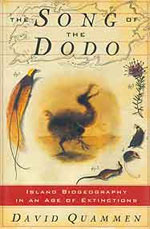
The Reluctant Mr. Darwin Nine partially dissected barnacles clustered in the home of the eminent bio-evolutionist Mr. B and proceeded to cement themselves down for the evening. They learned "What Darwin Didn't Know" in the February 2009 issue of the Smithsonian [read it here]. They learned that David Quammen initially wanted to title the book "The Kiwi's Egg" - his publisher asked him can you please come up with another title? Rob suggested "The Barnacle's Penis." They learned of an interview with Quammen here: http://www.terrain.org/interview/21/ Quammen's previously most acclaimed book is The Song of the Dodo in which he states, "islands are where species go to die." Some of the barnacles spoke: |
|
Ed: Quammen was trained at a Jesuit school, not unlike Tim Russert (Canisius); in the book I am currently reading, it tells of such prep schools having a Dean of Discipline who would have perps write an essay on an imaginative subject e.g., life inside a ping-pong ball. Thus I am not surprised at the imaginative names Quammen uses (or attempted to use) for his books. This book I was not able to obtain the audio version from the Library of Congress - pass. Charlie: I really enjoyed the book - non-fiction and different - the subject matter provided a naturally fascinating story. A little too much colloquialism, a little too informal - A- Ken: As a research scientist and a non-believer, I was fascinated with the story. Especially with Mendel providing 40 copies of his research which was "lost" for 30 years - who knows how many scientists published perhaps 10 copies of their work and it is lost to history. Wallace was in the same mode: not connected well to the scientific community. Overall, a most worthwhile book: A- Mike: The two books I have just thoroughly enjoyed over the past year have been The Yiddish Policeman's Union in the fiction arena, and this The Reluctant Mr. Darwin in the non-fiction. Start to finish, I loved 'em both. The writer got a little corny at times, a little off the wall, as in "he shot that octopus out of the sky!" but overall he made it fun for me as the reader. I loved his insight: "He didn't foresee being swallowed up by barnacle taxonomy for eight years ... His study must have smelled like a pub, from the evaporation of pickling alcohol off his specimens." and his choices of Darwin anecdotes: Little son George asking his playmates, "Where does your father do his barnacles?" A- Rob: I second that. From my earlier education I vaguely knew of the voyage of the Beagle and Natural Selection - I didn't realize twenty years transpired before he published. The author told the story well - however was the section on the barnacles going to last forever? I think he took some poetic license in the telling but he told it well: A- Dick: The book was interesting to me as a non-scientist. I always thought Darwin went on the voyage, came back, and wrote the book. Well-written: A- Tom: I liked it too. It could
be too colloquial and personal, or too scientific - the author struck a
nice balance. I have found there is no Eureka! movement in science -
almost all of science is built upon what has come before, and much of
it is accomplished little by little, as a team. My personal
favorite
part of the writing was pages 117-121 where Darwin lost his beloved
daughter Ann. The author descirbed so well how Charles and Emma
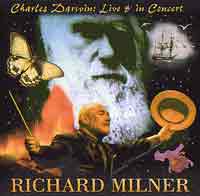
really enjoyed this little girl - very moving passages. A- Keith: what impressed me is that Darwin spend most of his life dabbling in decimal places. Under the pressure of Wallace he moved to an integer. Secondly, I am interested in the Selling of America on The Theory of Evolution. Finally, I confess that in the Children's Section of the Ernie Pyle Library, I found a great book: "Charles Darwin" by Richard Milner which tells more of the story than was covered in Quammen's book: tells of his ghost-busting (anti-spiritualist), worms, etc. This book I give a solid A. Ron: Same grade: A- I thought the story was excellent - it wasn't a historical account of Darwin. The book read almost like his talk - it was highly readable, not written for scientific audience. |
|
And from those barnacles who
escaped the jar:
As promised, my review of your selection for April follows:
I thoroughly enjoyed David Quammen's The Reluctant Mr.
Darwin. I thought Quammen provided fascinating insights into
Darwin as a man and a scientist. Knowing very little about
Darwin's personal life and being even less aware of his long and
difficult struggle to develop and substantiate the theory kindled by
his Beagle voyage, I came to empathize more with him and to
better appreciate his role as a revolutionary thinker.
Coming from a non-scientific background, I found Quammen's
informal style refreshing and easy to follow. I would probably
not voluntarily read a book about the theory of evolution, but I
enjoyed Quammen's approach and would give it an A-.
![]() Wish I could have joined in the discussion, but I know Mike
will capture the essence of it all.
Warm regards,
Jack
Note: our host pointed out that for the first time in the Club's history, all the reviewers (of the assigned book) gave the same grade. In this same room, only two years ago, the Club "hit for the cycle" - i.e., all possible grades were rendered for the tattooed snake lady: A, B, C, D, F. |
Eight wovits invaded
the Gillen
Farm in Sandia Heights and camped out in the living room. They
brought pangas and knobkerries and
proceeded to
b ow down to the one
who growls. At the end of the evening they
shouted, "Igatla! - I have eaten! (Zimbabwean sweet potato
cookies)" And
they contemplated if the whole
idea of progress is a paradox, a rocking horse that goes forward and
back, forward and back, but stays in the same place, giving only the
illusion of motion.Wovits were provided a spreadsheet of Zimbabwean inflation rates (official) since independence in 1980, ranging from 7% (better that US that year) to 1985 (10%) to 1991 (48%) to 1997 (20%) to when they start taking away the megafarms in 2000 and it moves from 55% (in 2000) to 598% (2003) to 1,281% (2006) to 66,212% (2007) to 231 million % (by July of 2008). Today Zimbabwe has a 94% unemployment rate but Mugabe has moved into his 25 bedroom home. Ken told of his trip to Victoria Falls in 2007 and seeing men just sitting along the highway, staring off into space. Mugabe rules to this day. And the wovits spoke, some using their own names: |

|
Keith: My report may be
somewhat askew as I read The Poisonwood Bible.
However I will note that tonight is the National Spelling Bee which
puts one in mind of the historic moment when Harvard faced off with
Texas A&M in the finals of the Collegiate Spelling Bee. Timbuktu
was the subject. Each had to write a poem and here is the result. Ron: This was another book about Africa but I'm glad we read it as it provided another view. The anecdotes were well done. And the book was timely with the elections in Zimbabwe during February of this year. The story was well written and interesting. A Rob: I found it very interesting and moving - the story of a family was highly emotional. The author Godwin was watching his father die and his country die - what will it take (in time) to improve the situation in Zimbabwe? One of the characters (the father) said whites in Africa are like Jews anywhere - waiting for the next crisis to erupt. Mum was an heroic character. At times, my cynicism said, Is all this really happening? Or are we being taken like Oprah on her memoir? This was the best non-fiction we've read in years: A Tom: I agree with all that - I read the book in two shifts, both on a Kindle, and for the first shift I didn't enjoy it as I was just trying to get through - kept hitting the page forward button as there is a slight lag before the page refreshes. Yesterday I read second shift: chapters 17-22 and it was wonderful. The author hit all of the great themes of the book - WWII, sister in London, Rhodesia, and his own achievements. I didn't do the first part justice. I would disagree with the individual in the book regarding whites in Africa: they brought colonization but were not persecuted like the Jews. A- Mike: So many, many interesting and well written anecdotes under two or three main themes: Mugabe's power grab/racism, George Godwin's double life and escape from Nazis, Peter Godwin's numerous attempts to shield his parents from harsh realities of a changing world. The book was very well written, I appreciated the author's clever writing/descriptions - he made a rather depressing journey worthwhile, highly informative, actually enjoyable. A- Joel: I enjoyed reading this but found it extremely depressing. Perhaps because I was also watching a movie that follows the body of a Marine from Iraq to Dubois, Wyo. I will try not to break the string: A Well done, informative. Individuals within Zimbabwe were good people, as exemplified by the Hindu priest making the deceased Godwin father an honorary Hindu so that the body could be cremated, and helping throughout the cremation ceremony. Dick: Like Tom, I didn't read the book in the best frame of mind, as I was correcting the proofs of a textbook at the same time. I didi find this book depressing - yet I told my wife that she should read it. Beautifully written. One thing that bugged me: how many times we heard that the average Life Expectancy of a Zimbabwean is 35 years (or 37 or whatever) - the author felt he had to tell us that over and over. Very interesting story. Give it an A- Ed: I also found it very depressing from a humanity standpoint. The characters were heroic. I had some issues with statistics in the book. It was depressing on what happens in a country - another example is the book Three Cups of Tea, where the theme is: the negative consequences of good intentions. I thought the Treblinka section was gratuitous (but I've read 10 books on the Holocaust). I didn't see the connection with the detail in Africa. It did provide a good update of Rhodesia and begs the question: How to get out of this situation? B+ Charlie: A- Very good, good writer who went through extraordinary times. Ken: I apologize for depressing a number of people. I enjoyed it a lot - the history. But at the end, Peter and his wife have a good life in New York, the daughter (and the mother we learn) are living in London and doing well - only Zimbabwe continues downward. A |
| ... and from the Wovits who had slipped
across the border: I carried Peter Godwin's When A Crocodile Eats The Sun from the rain forests of Costa Rica to the ancient stands of hemlocks in Nova Scotia, only able to read short sections at a time without referring to an atlas or gazetteer and without making the effort of keeping a list of characters, all of which probably hampered my ability to fully appreciate Godwin's craftsmanship as a writer. I did find the story powerful and the events tragic as has been the case with all the books we have read about Africa. I had hoped to gain a better understanding of the reasons behind the apathy of the developed world and the silence of the developing world toward Mugabe's dictatorship and the suffering of the people of Zimbabwe. The parallels Godwin draws between the plight of the Jews and the "minorities" (including the opposition to Mugabe) in Zimbabwe were obvious, but I thought he spent to much time drawing them. But I guess [Godwin's] analogy of the rocking horse is a good one, since we obviously do not learn from history. B+ Regards, Jack |
| Seven Dominican Nerds emigrated
to
the wilds of Placitas to visit Señor Farrell and meet Monsieur
Bourdrez who, like Junot Diaz, came to this country
(and New
Jersey) at the age of 6 or 7 speaking not a word of English, and
English became his first language. The Gathered
Nerds discussed the loves and trials of young Oscar and how there
exists no translation site for the Spanish
(or
the role-playing) liberally sprinkled throughout the book. We learned
that even triffids
and Unus the Untouchable have their own Wikipedia
entry - which is more than any of us erstwhile Dominicans. The gathered nerds spoke: |
|
Charlie: I enjoyed the book. I guess I found myself put off with the Spanish and many references to games and Lord of the Rings. So I was outside of much of the references. I found the story line very depressing. B Ken: I had the same comment as Rob: First Mugabe, then Trujillo as we continue our tour through the dictators. I found the book moved slowly: the language, the slang, the references were too far removed from my context. But I actually felt the book felt stronger and became much better in the second half - I enjoyed the stories of Beli and Abelard more than the story of Oscar which was predictable. Too much conversation about totos and other privates. Left me with mixed feelings and a grade of B+. Mike: Perhaps because I got to hear (and speak to) the author in person, and perhaps because I read some at that time, I was not put off by the footnotes or the Spanish. The language at times was indeed shocking. Yet what make this book special to me was Diaz' ability to take depressing, brutal sequences under Trujillo and get us through them with a sparkling sense of humor. (Great Example #1: "And you thought your committee was tough!" GE#2: the reference to the [still frightening to me] Twilight Zone episode ["It's A Good Life"] of the god-like little kid sending adults to the cornfield [vice cane field] in Peaksville). The language was uplifting, sparkling. I have recommended this book to others and give it an A-. Tom: A- I enjoyed it a lot - I read it quickly last summer - it reminded me of feelings I had when I heard Diaz, as the same kind of contradictions came across in his writing. Powerful essay of Lola and her mother discovering and feeling the lump from breast cancer. I thought the momentum built from beginning to end. I give it an A- (vice A) because this is not the style I rate the highest or like the best (I like the more traditional beautiful style). Ed: I appreciate history and obtaining more than the mandatory two seconds of DR history. I was put off by the slang and street language - was that amount necessary? As to the Spanish: the more traditional approach is to translate it for the reader. This is not the type of language you are used to. However I liked the way the characters were linked and the strong central role of women. Overall: B+ Dick: Over the years I have tried to read many of the books that have won the Pulitzer Prize and was often disappointed. So when I saw this had won the Prize, I said Oh, Boy, here we go again. However I liked this book. I liked the characters although I was disappointed in Oscar, the least interesting of the characters. The infusion of language didn't bother me. A- Michiel: A very well written book. Not easy to read. No quotation marks. It took some work to get into it. I had experienced the context of New Jersey references. So a criticism might be: this is not a universal book. It was a challenging book - I loved the women in the book. I agree that Oscar was a bore. A- Great book. Jack: I became totally engrossed in the life of Oscar Wao and the fukú. I believe the curse served as a bridge across time and space. I agree with Mike's "sparkle" - of characters and cultures portrayed in the book. His bleak and raw prose reminded me of Cormac McCarthy (plus the Spanish). Oscar was bleak, however the women were full of energy. Refreshingly different. I would give it an A; as I didn't have any trouble with the profanity, but did with the Spanish: A- |
|
and some late reviews from the cane fields: Review: The Brief Wondrous Life of Oscar Wao, by Junot Diaz I almost quit
this book after the first couple of chapters. On
the road, knew I wouldn’t be at meeting, etc.
I
can handle gritty realism, but it seemed to me that the author, through
the narrator, was going overboard with the obscenities and profanities
– particularly the n-word. Similarly, I
can
understand mixing in a dose of Spanish to create an atmosphere, but,
again, it seemed like Diaz was over-using this device.
Here, I think he was saying, You Gringos can’t understand
what it means to be a Dominican, so don’t even try.
I’ll give you a glimpse, but that’s all you get. Use your
imagination. But, then, I got interested
enough in the story of Oscar and his family to be willing to accept the
book on the author’s terms. It
was a bit masochistic, and I couldn’t help thinking that the book got
awards from the sort of folks who get a thrill from being abused by
third-world angry authors (the ‘soft bigotry of low expectations’), but
I read on and finished the book, caring about what happened to these
people. There even came a time when I
thought
the author should have used Spanish instead of English: the narrator
used the word, calumny,
when it would have been much more in character
to use whatever Spanish word best invoked the notion of bullshit. I
concluded thinking that this book belonged in the pantheon of
gut-wrenching inexplicable evil and misery that we’ve been exploring. I’ll see your Mugabe and raise you a Sorry to miss meeting. Cheers from Havre, MT. RobAnother
book, another dictator. But I did enjoy the historical aspects of this
book relative to the Dominican Republic. Like some of my fellow
bookmates, I found the women more interesting than the menfolk, with
the possible exception of Abelard. The writing, though excellent, was
way too overflavored with profanities for my taste...else I could have
given an A. As it is, my
grade is B+(ish).
Would I recommend? Maybe but
with caveat..
- Ron |
|
Nine filthy roustabouts were redlighted near the trestle overlooking Parkland Circle and picked themselves up, dusted themselves off, and began discussing: the decline of freak shows due to cosmetic surgery, the impact of television on the carny scams, the lack of scrotum hair, the Cash for Clunkers program, and how circuses have survived without trains. The more literate dwarfs spoke: Tom: I enjoyed reading the book - it is a story that sucks you in. She did a great job of making you see the seamy underside of circus life. B+ As a story it was excellent, the writing was mediocre. Dick: We had carnivals come through in Utah. One of our neighbors was hanging around and found himself hit up alongside the head and his money stolen. But in general carnival people were nice. I didn't like the ending of the book, too neat. The young couple makes off with an elephant and all the show horses? Come on! And the elephant would replace his stake? The nursing home episodes seemed realistic. B+ Ron: I've been to several circuses - I could see these scenes vividly. Just picking a novel to read, this is about as good as you could expect. I give it an A- It was historical with a interconnecting plot. Ken: I tend to agree with Tom and Dick - from a positive point, the novel was entertaining. I liked Jacob's comments on life viewed from the perspective of an old man. The photos added to the entertainment and interest. On the negative side, the novel had a far-fetched ending, escaping from the nursing home, and the villain killed by an elephant. Other parts also seemed preposterous - yet the author researched and says these events actually happened. Since I enjoyed reading it: B+ Charlie: I read the book in two days. I wish it had been written by a good writer like Updike. B+ (but an A+ for entertainment). Ed Duff: I enjoyed it at a number of different levels. A friend's father was a "carny" which gave me insight. We've undergone an evolution of sorts. Today we have Las Vegas Cirque du Soleil, high wire and gymnast acts. One comment: the author described events based on fact, yet fiction makes things up. So it didn't bother me with the specifics of details. A- Michiel: I sort of liked the ending. Contrived but that's what fiction is. Positive that the guy got out of the nursing home. (do we even have Nursing homes any more? I guess they are called Assisted Care today). It broke the depressing part of getting thrown off the train. I could relate to it: A- pretty realistic. Keith: This was a summer read, no great goal in mind. I read it for the integers, not for the decimal places. B Joel: My wife and I both liked this book which is unusual for us to like the same book. As far as the way they carried out their circus business, most of these people would be on America's Most Wanted list today. Interesting to see the subculture and the sympathy for the animals. Jacob dropped out of school and came back - the schools work to salvage you once you're in. As to the ending: finally reaching the goal line. I enjoyed it - not great stylistically but the writing was adequate. A- Mike: If Rob were at the meeting (since he complains about stereotypes like the homosexual priest in The Sparrow), I would say, What a stereotype - the Shakespeare-reading dwarf! When I'm reading a book, I hit a serious speed bump when I run across something that doesn't ring true. Shaving hairless testicles was one such bump. Jacob crawling across the top of the moving train while holding a large knife in this teeth was another. It did keep me reading it, I enjoyed going through the story, realistic or not, but overall: B+ And from those previously redlighted klinkers: |
|
I didn't find this romance novel particularly compelling, after Barbara the stripper finished her show. The nursing home scenes were entertaining, but the circus story itself was not so well written and not so credible. The characters seemed to change character. E.g., Jacob the vet loves animals, but Jacob stands by while the elephant in his care is brutalized, I guess so he (Jacob) won't lose his job or his girl (I really quit trying to make sense of the story). Thank goodness, though, Rosie understood Polish. However, if there had been one more instance of two characters whose "eyes locked," I would have chucked the book and called a locksmith. C. Robp.s. I've seen that the Washington Post is collecting commentary on Frank McCourt. Might be of interest. I enjoyed Water for Elephants. In my
opinion, not great literature, but a great story. Sara Gruen kept
me turning the pages. It provided me with a lot of insight into
the world of the circus and the conditions in our country during the
1930s. My great grandfather and grandfather were performers in
the circus during the early 1900s, so I gained some appreciation for
their way of life. I did not realize how many sleazy characters
made up a circus. Maybe I is one. Hopefully my grandparents
were more like Jacob and not like Uncle Al.
I liked the way Gruen framed the story with Jacob as a 90 or
93 year old, but it was a little overpopulated with characters for
me (over 40 named). Maybe that adds to the realism of
the nature of a circus.
All in all, I would recommend it to my family and maybe a
couple friends. B+
Jack
|
|
After departing the red-light district of Amsterdam, a small group of would-be touch-up artists and half-assassins gathered in the Tanoan District to discuss Daniel Silva's tale of Israeli espionage and terrorism. Fortunately, no one was shot in the eye. The following comments were overheard by our audio expert: Dick: The Kill Artist is an interesting story of international intrigue and the global fight against terrorism. It is also one of many books that focus on Israeli intelligence efforts. It also raises some intriguing questions about morality, particularly on the part of Ari Shamron who allowed the killing of a terrorist even though he knew the terrorist was dying of a brain tumor. I enjoyed the book but I did not find some of the characters believable. Tariq was a horrible person but he is almost likable at times and his death seems a bit too easy--I also find the fact that Arafat changed his mind so easily a bit unbelievable. I had a hard time believing that Jacqueline really was an effective agent but then again, the book has to have a sexual and love interest. I think my biggest question was about Yusef--I just had a hard time accepting that he was a double agent. I also don't think this book is as good as
some
of the books by other writers such as Frederick Forsyth who wrote The
Day of the Jackal and other books. The Kill Artist
is apparently one of a series of books with Gabriel Allon as the main
character. I plan to read some of the others to see how they compare. This book is quite well written and quite
interesting. I would give it a B- An easy read that went fairly quickly for a 500 page book. Reasonably interesting and well-developed characters. Seemed to be well-researched so it had an educational aspect. A bit too many characters to keep track of. Although there was a lot of movement from one location to another, there didn’t seem to be much action for a spy thriller. When the action picked up in the last third of the book, the plot was so contrived and unbelievable, I had a hard time buying into it.
Examples of ridiculous storylines are too numerous to mention but three stand out.
Joel:
This was an enjoyable read, and hard to put down. As with most books of
this type, plot outranks style. I think most of us appreciated the
apparent attempt to present two sides to the long Israeli-Palestinian
conflict, although the portrayal of Arafat seemed to have been written
by his publicist. I am always fascinated by the variety of background
careers in this type of novel (art conservator, horse fancier, garden
expert, bell ringer, etc.) to differentiate the major characters. Charlie:
I do enjoy
thrillers like this; it was a page-turner, a fun read. However,
like
many books in this genre, it is formulaic and one-dimensional, probably
intended to be the basis of a Hollywood movie franchise such as the
Ludlum Bourne series. Silva is certainly not the equal of the
really
good espionage/thriller novelists, such as John le Carre and Martin
Cruz Smith. So, it is hard to take it seriously as "good"
fiction. I
give it a B for its entertainment value. Tom:
I enjoyed the story for about 2/3 of the book and then it
went flat with a disappointing ending. The writing was no better than
average. Grade: C Gary:
It was most enjoyable to see everyone again this evening and to meet Dick Jensen. I give "Kill Artist" a B. It was a
great page turner and a good source of history on the
ethnic cleaning of Palestine by the Israeli Army in the '40s. There were
perhaps too many characters but the story evolved well. From outside the Kill Zone:
Sorry I'll miss the discussion tonight. I'm somewhere in the wilds of eastern Oregon, but found a friendly librarian in Pendleton who is allowing me to use their computer. My comments about the book Ed selected for this month follow:
I enjoy spy novels and can't believe I had never read any of Silva's. I found The Kill Artist a real page-turner and although the end was not completely unexpected, the way Silva took me there kept me guessing as to how and when it would happen. I want to read more of his work. A-
Jack Sorry to miss the meeting this month...I'll be in Maine
looking for blueberries and lobsters.
My review:
I enjoyed The Kill Artist.
Fast moving and well written political
action adventure. Held my attention from start to finish. A good
read. A-
.
Ron
I've read a lot of spy novels, my favorite remains the Smiley series by Le Carre. I thought The Kill Artist, by Silva, captures a lot of the same themes and emotions, though with a much higher level of violence -- how many people got shot in the face? At the end, though, the wrap-up scenes that brought the book to its end were hard to believe. In particular, the Arafat scene and the escape set up by one woman freeing another to go to the bathroom. Maybe Silva was being sardonic in the latter, or maybe he couldn't come up with a better idea. You knew the Israeli heroes had to live for another installment, Arafat, too, but it just was too unbelievable for me the way Silva arranged it. So, I'll give the book a B.
Sorry I can't be at meeting. Hope to see everyone next month, though given my AWOLness this summer, maybe nobody will come.
Rob Mike: C. C is for Crap. Unfortunate, as the first few chapters gave such promise and demonstrated some clever and entertaining writing. However, when Jacqueline was freed from her shackles and allowed to go to the bathroom, and even allowed to SHUT THE DOOR!!!! - and spotted that errant nail file, Daniel Silva slipped from a semi-plausible B (B is for Better than hack) writer to a solid C for his would-be Ian Fleming effort, The Kill Artist. The plot is ridiculously involved and uselessly complex. The writing style is not that bad in itself, but certainly it is formulaic. Now let's describe a character: what are they wearing? How tall are they? Are they handsome or ugly? Wavy hair? Now put your characters into the box – now barely allow them to escape! A car drives in between Tariq and Gabriel! Oh my! Was that exciting! And Jacqueline drops her purse! into a wet puddle of ... CRAP! Looking hard for something good to say about Silva’s writing beyond the first chapter, at least he provides some of the "Rest of the Story" – why the Palestinians have every reason to be as cruel as the Israelis. William Steig was right: people are no damn good. I also found myself wanting to see how Silva would close all this back-and-forth; however, I journeyed 40 pages too far. Now I find myself strongly never wanting this book recommended to anyone except aging Jewish models who hope for a more fulfilling life and are nowhere as clever as Sarah Silverman. So much is implausible – don’t tell me to
suspend my disbelief, tell the dang author to convince me!
Example: We have the
most accomplished terrorist in the world, Tariq, who devises a plan,
gains highly implausible access, and then is easily talked out of his
mission
by his high-profile target. Ha! And we have a fictional story however
we must write into it an actual human, Arafat – so why
not an actual
senator or ambassador or even President? Example: We see the
Israelis transport
a 33 year old model to Israel and give her a "crash course" in becoming
a spy – get real! And then later calling her "a professional" – Ha! A
professional perhaps in the same sense that Silva is a "master writer
of espionage." |
| Eight
not-stupids Terrans gathered at the Cedar Crest warren: seven regular
members and one guest/prospective member, Bob Woods. The transmission indicated that Heinlein was a USNA
graduate. He was discharged for health reasons (TB; while
recuperating he came up with the idea for the waterbed) in 30s, but
went to work for Navy as a civilian engineer when WWII broke out.
After his death, his widow (third wife) endowed a chair in
aerospace engineering at the Academy. She also endowed the Butler
city library. They lived in Santa Cruz, just up the coast from
Monterey, where they designed and built a round house (Bob Woods
said it was famous in the area). He had one of the first heart
bypass operations in 1978. Also, was on TV with Walter Cronkite
the night of the first moon landing. NASA named a crater on Mars
for him. When his health deteriorated, they moved to Carmel where
he died in 1988. The subsequent gathering was TANSTAAFL, but dessert free:
serving size by random numbers, not book ratings, as dictated by
Federated Nations. Among summary reviews following, some may be
supplemented by Earthworms during next lunar cycle:
|
|
Jack --
found the book uneven, difficult to read. Didn't enjoy it as much
as other books this year. B
Charlie
-- enjoyed the book, thought it was well-done science fiction,
believable. Graded it down to an A-
because of political stuff.
Ken --
felt it needed a glossary to better explain stuff like line
marriages. Thought book 1 should have been titled Dinkum, Thinkum, and Stinkum.
Second half better. B
Ed --
enjoyed it. A-
Keith --
beginning and end were too far apart. B-- (not
a typo)
Ron --
"the book just didn't maintain my interest. It
seemed to be
very slooooow going. By page 72 I'd had enough. I hear the
last half
was better. Guess I should have
perservered....." Abstained;
quit reading at page 72 -- three-person cell stuff.
Bob Woods
-- abstained. Read it years ago but couldn't find a copy in the
short time I had to read it before this meeting. Heinlein,
though, was a major early influence on my life.
Rob: I picked this book because I've been vaguely aware of Heinlein for a long time: he was born in Butler, MO, where Judy was raised and there are signs announcing that it is the Heinlein birthplace. I've never read any of his work, though, that I remember. Then, some time last spring I saw a passing reference to the book as being a libertarian manifesto, so thought that might provide food for thought. Dessert -- pie from the Asbury Pie Cafe at the State Fair - apple and blueberry - with ice cream. And from those Earthworms outside of the Lunar City gravitational field: Robert Heinlein I remember strongest for his "Stranger in a Strange Land." Many geeky teenagers warmed up to that, and we went around saying "Grok" for awhile. Good story, very moving. I think he was well ahead of E.T. on that one. "The Moon is a Harsh Mistress" I found disturbing on several levels. I think I could see what Heinlein was doing, he was celebrating our 200th anniversary of our own revolution by having us witness it again, but this time the colony was perhaps more like Australia: a penal colony that constituted the basis of the population of the moon in 2076. We today (I write this on "Patriot Day") are in the curious position of being 50 years after Heinlein wrote it, and 50 years prior to the time line of the story. The pidgin English (or Esperanto) was most distracting to me. I noted when he had Adam Solene provide a formal talk to the people of Luna City, he used the King's English for that talk-talk, no pidgin English there. This makes sense, and I would have thought the rule was: when you are writing a book you would use the formal version of the language; when speaking, perhaps the informal. If the book was presented as a journal of Manuel O'Brien then perhaps the pidgin would apply. [Editor's note by Rob: "My impression was that only Mannie, who was the narrator, spoke in Russian-like pidgin English. The others, notably Mike/Adam and the Prof, spoke the King's English. I certainly haven't checked it line by line, but others shared my impression." I liked the character of Mike/Adam Selene, very cleverly done with his growth throughout the story, and then his collapse into a Post Traumatic Stress Disorder after the Revolution. Reminiscent of Arthur C. Clarke's Hal in 2001, although I would guess Heinlein was first. Disappointment: I would have thought that Mike would have thought of/known to set up some radar stations "behind" the moon as to provide eyes there prior to any attack from Earth. The character of Wyoh started with such verve and fun, then somewhere along the way we lost her. She almost disappeared in the second half of the book, and one time in the third part, you could sense that Heinlein said I gotta bring her back to check in at least. I was surprised that Heinlein seemed to miss out on big technology changes in his year 2076. For example, Mike was apparently a unique artificial intelligence machine, yet the seeds for that were around in 1966. Secondly, I was really surprised that Heinlein missed the boat on cell phones - in 1966 we had short-wave radio and certainly knew about radio waves, yet all the Luna phones were fixed land lines - and indeed this was important to the plot so Mike could track intelligence through the phone system. Again, no foreknowledge of spy communications as we know exist even in the shadowy world of Maxwell Smart. So much of the book was a primer for revolution and I found that both disturbing and, after 200 pages of it, boring. I would have given the book a C primarily because it read so datedly. However in Part 3, Heinlein re-appeared as the old Heinlein that captured me: He told of the action, the victory, the change, the battle, and moved the entire book forward from C to B-. Best regards, - Mike I too will miss next week's meeting, for essentially the same reason: visiting relatives in Minn. Better to stay with the earthworms than to sleep with the fishes. Review: I have not read any Heinlein in years and enjoyed this read. I think the engineering plausibility was ok, but I think 2075 will come well before the Lunar civilization will flourish. The induction catapult had been contemplated by 1966, and the consequences of prolonged low-gravity life were well-explored in the book. Heinlein explored social structures and relationships well (cf."Stranger in a Strange Land") so all is not techie. A fun read, and thought-provoking; the anarchists certainly were rational, and for sure, TANSTAAFL. I give it a B+ Joel |
| Until one morning in mid-November of
1959, few Americans - in fact, few Kansans - had ever heard of
Holcomb. Yet fifty years later, the mature readers of the Last
Thursday Book Club gathered together to discuss this town, the late Mr.
Truman Capote (who died from liver desease complicated by phlebitis),
and the late Mr.
Herbert William Clutter. The gathering occurred at the home of Mr. Joel Nash. It has been said of Mr. Nash that his shoulders were broad, his hair had held its dark color, his square-jawed, confident face retained a healthy-hued youthfulness, and his teeth, unstained, and strong enough to shatter walnuts, were still intact. He weighed the same as he had the day he graduated from Kansas State University, where he had majored in agriculture - a hundred and fifty-four. Well, perhaps he weighs a biscuit or two more than a hundred and fifty-four. He claims it is in kilos. Regardless, Mr. Nash welcomed the group into his farmhouse. The doors were unlocked, the basement was empty, our mattress cover was in place. We located the farmhouse with the help of former member Floyd Wells, and rode there in Kenyon's old coyote wagon. Many of those gathered had opinions on what had happened to the Clutters on that fateful November evening: Tom: Trying to think: is this an A- or an A? I liked it a lot – went into the book thinking, "here’s another Liberal New York writer" – however ‘restrained’ is the perfect description of his handling of the subject. Truly a page-turner. It was difficult to put ti down. The last 40 pages about other serial killers was probably not necessary - would have been better if shortened. A Jack: I can’t believe I’ve never before read anything by Truman Capote. Certainly was gripping if not intense as the NY Times reported. I found his sentence structure very tight. I want to read more from this author. A- Keith: Truman Capote: "I am not a saint, however I am an alcoholic – and an A Charlie: A Mike: I read "In Cold Blood" some forty years ago - it scared me badly then, and it disturbed me this time as well. I thought Capote did a good job of taking a horrific incident and building it, back and forth between the victims and the antagoinists, allowing the reader to see the two converging lines with but a single common thread: jail house conversations and the quest for "the perfect score." I did not think he needed to cover so much on other cases, although the other folks on death row were each fascinating on their own. A- Rob: I was caught up with it. Besides being sympathetic with Kansans, I found the author did ot put down the farmers and local folks as I’ve seen other authors do. The book drug for me in the middle with the long letters to/from the inmates. Still impressed after 40 years: A Ron: I was impressed with the first chapter and hoped it would stay that good. I thought the last part (other serial killers on death row) was germane to the story – and it was not really 40 pages, only about a half dozen. Some of the letters gave insight, getting inside their head. I give it an A. Well written. We knew the outcome – flash forward, back, a masterfully crafted story. Never read Capote before. Ken: I thought the writing was fantastic. The middle was a little long. Suspenseful. Was in the A to A- area. I’ll give it an A- to average with Ron. Joel: I had not read this before. After seeing the movie, I knew what we would learn about. I was impressed by it. A |
|
And from just outside of Kansas: I am in Maui. The weather is beautiful--in the mid-80s
but the
humidity is quite high. Carol and I just got back from a very
slow
walk on the beach. After that wonderful walk, my thoughts turn to
In
Cold Blood.
30 or 35 years ago I owned a copy of In Cold Blood.
I must have
carried it around for 5 years without ever reading it. I had seen
Truman Capote on television and was so revolted by him personally that
I could not read his book. I wish I had been more mature because In
Cold Blood is a great book. Capote ably captured the
crime, the
participants in the crime and the investigation, and the setting.
The
writing is clear and powerful. I was not bothered by the dialogue
that
he obviously had to make up. I actually found myself liking the
killers or feeling a bit sorry for them. I would give it an A-.
I wish I could be there because I think the discussion will
be great.
I hate to miss these meetings but I will return next
month. Aloha!
Dick |
| Last Thursday, eleven former Cambridge dons gathered at
the Poland St. house of Leo Rothenstein to cavort on the couches and
partake of caviar and cheese. They learned that John Banville wanted to
be a painter and regretted not attending college which he says was "A
great mistake. I should have gone. I regret not taking
that four years of getting drunk and falling in love." The author is prime candidate for becoming a
homosexual as he is married with two children. As to the book, we
learned The Untouchable (1997), Banville’s tenth
novel, dissects
characteristics of deceit and betrayal through the fictionalisation
behind the novel’s protagonist, Victor Maskell, of Anthony Blunt (1907-1983),
the distinguished art historian who was director
of
London’s prestigious Courtauld Institute of Art (1947-74) and Surveyor
of the King’s (later Queen’s) Pictures (1945-72). Blunt was also a
communist sympathizer who was an influential member of “the Apostles”,
a secret society at Cambridge University many of whose members were
homosexual and would become spies for the Soviet Union. Blunt was
recruited by the NKVD in 1933 but only revealed to have been the
“Fourth Man” of the Cambridge Five in 1979 when Margaret Thatcher
exposed him in the House of Commons. Often
the book stayed true to history for as World
War II was ending, Blunt successfully undertook a special mission
to the defeated Germany on behalf of the British royal family, to
recover incriminating letters written by the Duke of Windsor to Adolf
Hitler.
The mission may have also recovered the so-called 'Vicky Letters',
between Queen Victoria and some of
her German relatives.<> The dons spoke:
Joel: I thought it was an interesting book. It took me a while to get into it. Very well written, however the subject matter was unpleasant. Characters reminded me of The Great Gatsby. References to "our level" and a complete lack of care for others in society. The hierarchical system, e.g., the protagoinist becomes a Captain just by showing up and knowing someone. I give it a B. Keith: I See A "C" "Untouchable": 'tis interminable masturbation Perfidious and perverse rumination Our Maskell: a homoerotic "querro" His gasconading sums to zero And Banville's style ... endless sesquipedalian Mike: I Cannot Avoid An A. This book reminded me of three or four we have read, particularly The Debt to Pleasure. I read this book with a smile on my face and a song in my heart. Or head. So many fun episodes - the scene where Maskell has to confront Mrs. Beaver to ask for the hand of Baby is one of the funniest I have read in some time. The writing was superb - such as "a tracery of raindrops' and "Sodden sycamore leaves lolloping about the road like injured toads." My only criticism was the author's/narrator's overuse of rhetorical questions - do we have to keep interrupting the narrative and asking questions? - and his continued insertion of Carrickdrum. Overall: A Ken: I thought the writing was great - many passages just wonderful. I had to decide to read 25 pages per hour without using a dictionary, or 10 pages per hour looking up words. I chose the former. The story was a bit long-winded at times. The first one third was show, not a lot of action for a spy novel. Too much coupling. B+ Dick: I told my wife I didn't know how I'd grade this book. Too much drinking and coupling. The protagonist was an A-hole - I've known people like this. B+ Ron: Good story for writing itself. It was not about spying but about relationships. Protagonist was a twit in the true English tradition - the English love upper class twits. The story was a B, the writing was A, overall an A for great prose which held my attention. Bob W: I'd give it an A. I've been interested in the Cambridge Five for some time. The material was organized and well done. The author made you feel not at all sympathetic with the main character when usually if a story is written in the first person you tend to identify with the character. Clever piece. Jack: I was intrigued by Victor as arrogant as he was. I found the prose to be beautiful. I hated him. I'd give it an A- Tom: I'm on record that I don't care what the book is about if the prose is beautiful. This book tested my resolve. I did have a tough time with the main character - I couldn't even hate him. Lots of ambiguity. One of the reviews said the author is guilty of "overwriting" - I'm not sure what that is, however I agree. A- Ed Duff: I'm clear that if I don't like the story, I don't like the book. This was much ado about nothing. No compelling message. No heroic women in the book - if it was a Jonathan Swift approch then some satirical value but no postive message. B- Charlie: I give it an A-. As Tom said, it was extraordinary writing. If the writing is that good, then it is worth an A. The minus is for the story. and from the beach front property just beyond the Poland St. house: |
|
I did read Part 1 of The Untouchable before we left. Unfortunately, I didn't find the book compelling enough to justify carrying it along to Hawaii and finishing it. Too heavy, too bulky. Too pretentious, too self-consciously artsy. The author threw in all those literary references for the benefit of the literati, not to help the reader - at least a reader like me. Also, the moral ambiguity of the Cambridge group who spied for the Russians has been well-covered, and better, I think by Le Carre and others, and I'm no longer interested in hearing more about it. A pretty disgusting bunch -- as Part 1 illustrates, perhaps in ways the author didn't intend. So, I'll give Part 1 a B-. Really sorry my second year in a row to miss the opportunity to see Charlie's new house. Maybe next year. Cheers,Rob |
| "Know then my own Dear Betsy I
have lost the Bounty..." Is this not one of the saddest
lines in literature? Eleven of us gathered aboard the SS Stalgren Court. We were
encouraged to peruse Caroline Alexander's 2005 treatise: The
Bounty. Bligh was a villian in the novel - was he in real
life as well? We learned the interesting story of how
Nordhoff and Hall got together and happened to be in Tahiti to write
this novel and the trilogy. That story and more is captured here (Word)
and here
(PDF). |
| Keith:
I enjoyed this dynamic story. On a parallel with Endurance and
Shackleton – and a story of leadership that compared with Lewis &
Clark (Undaunted Courage). A Ken: Fantastic page-turner – I stayed up to 3 am (but then I’m not working). Endurance was in the same class of story. Good learning experience – I will investigate some of the facts. Solid A Charlie: Very interesting – not as taken with the writing – more like Capote: not fiction, professionally done. B Joel: I’m glad my commission was in the Army and not the Navy: Cruelty, sodomy, … I was impressed that sailors are more likely to screw up, and are punished harshly. I give it an A- Tom: I’m in Charlie’s camp. The Story was interesting – the trial took me along. The first person narrator (Roger Byam) was a flat character – he did nothing surprising, and he seemed to be uninteresting. He didn’t catch me up. B- Ron: Engaging, adventure story – quaint writing style which added to feeling. Court Martial was of less interest. Very informative as to shipboard life. 150 year prospective – not great writing. A- Dick: I have been trying to think all day of what grade. I thought the treating of the Tahitian people was sympathetic – authentic. I’ve only been on a cruise ship. B+ I didn’t have to force myself to read any of it. Good book, not fantastic literature. Jack: I found it a fascinating story. Even though the narrator gave us the outline of the story within the first two pages, it fascinated me as to how Bligh and Fletcher played it out. I found myself confused at times trying to keep track of over 50 characters, but fortunately the authors provided us with a list of the majority of the players. A- Ed: I’ve probably read hundreds of Naval books – so I like these stories. Most of them the Captains are heroic characters. Bligh is non-heroic. In the movie Crimson Tide the story centers on a mutiny on a ‘boomer” – there is something to fight about – this is less of a cause for a mutiny. I enjoy these Naval stories – good story, well written. A- Bob: I thought it was a good book, not a great book. Not all the characters were well developed. Life on the ship could be described in more detail. The natives were two-dimensional; the sailors were as well. B+ Mike: Don of Don's Books recommended the trilogy to me. I had never read the book previously, and my views were as portrayed in the movie, primarily the Charles Laughton as Bligh movie. I thought the authors did a great job of both writing the book, and not making it obvious re their collaboration. Making it a novel while working primarily from the journal of one participant allowed them freedom yet maintained the feeling of authenticity. Could you believe that Byam did not tell anyone back home that he was 'married' and had fathered a child? Overall: Well done, I would recommend this book: B+ And from the other side of the equatorial line:
Summary:
Bounty's
Brutal Bligh Banished
Byam's Bride Best Booty
Banks Byam's
Bonny Briton
I thought Nordhoff and Hall told
the story well, did a good job of expressing themselves in the
200-years old English of the time. (I wonder how their
collaboration worked.) Sometimes too much of a stiff upper lip,
though. The events, as I envisioned them, were more exciting
than Byam's chronicle. The fact that the narrator obviously was
not going to hang takes a lot of the suspense out of the trial, which
was the part of the book that dragged for me. Interesting that
Bligh's brutality and thievery were not really an issue. It was
just a matter of who mutinied and who didn't. I've read enough of
Horatio Hornblower to know how the Law of the Sea worked in those
days. I was bothered some that Byam didn't seem to give much
thought to his Tahitian wife and daughter during his captivity and
after - more British reserve, I guess. I am interested in seeing
what happened to Christian so plan to read Pitcairn's
Island. Bottom Byline: B+
How about polling the LTBC
gentlemen: Were you Byam, would you have chosen Tahiti or naval
career? My choice: Tahiti, even after its degradation in the 20
years Byam was gone.
Best
Betidings,
Rob
|
| Ten stalwart Swedes braved the
blizzard conditions to gather on the island. We learned that Mankell is
married to the daughter of Ingmar Bergman, which may explain some
of the stark images in his novels. |
|
Mike: .": It was slow going. I wasn't used to this kind of exertion, my only regular activities being a morning bath and writing up my logbook." I liked the 66-yr-old man telling us of his life on the island and how tough life was when you hated the only friend you have. I liked Harriet suddenly appearing with her walker on the frozen lake. Nice wrap-up to the book, without bringing Agnes and her girls back into the picture. I liked the bottle in the anthill - however the ending for the first time gave a reason for having an anthill in the story at all. The author seemed to try for extremes. Made me wonder if the whole book was a dream sequence - had we entered Kafka-land? His daughter lives in an RV and wears high heel shoes and boxes men? Whoa! And yet he seems to quickly bond with this 37 yr old hippie stranger? Would you think a few weeks overcomes 37-years, compared to a daughter one raised and watched grow into adulthood? B- Keith: B I have read several books from Scandinavian authors, which results in the following: A Note on Scandinavian Authors They love anger, hate, and gloom Yet now, me-thinks, I know the whys "N" darkles Null, No and Nocturnal Joel: Lutefisk is a white food which resembles boiled potatoes. I tried to read this book on nice days - too depressing! Everlasting winter - thank goodness we have better drugs so we can deal with the consequences. A gloomy book with interesting people. A quote I liked: "It is essential to sort out your effects before you die." Reading this book was like watching Fargo: B+ for the writing. Ed: I enjoyed reading it - I did enjoy the descriptions - enjoyed the characters. Clearly in one sense it was depressing, in another sense, redemptive. A- Tom: I reluctantly agree with Mike: some plot events were excessive. I liked the scene with the Father - not all-knowing. I liked the Party scenes. Didn't like the profundities spoken out loud. The story was interesting: B Charlie: I had problems with it - melancholy, morose. At the end, too many things that bothered me. Explain why the protagonist left Harriett to begin with. And had to go track down the patient - a doctor never asks a patient for forgiveness. And the sexual assault on the patient. Pretty well written: C Tom redux: Note the short sentence construction - I like more beauty in my prose. Ron: Be of good cheer my brothers - if you think this was depressing, next month we read Cormac McCarthy. I thought this one of the best books we've read: A Foreign films rely on a quality of loneliness which I found in this book. Not depressing to me - it had twists and turns, not knowing where it was going. Just the right length. Solid A. Jack: After reading Mankell's fame, I understand the size of the font in this book. The book was divided into four movements like a sympohony - but I wasn't able to link that significance. Despite that the characters' profound statements seemed trite, they pushed this book to a B+ Bob: I read this as a work of art (vice entertainment) - not rationale explanation but Truth. Makes you think why these people are doing these things. I wold give it a B. Dick: This was the second time I read this book - I really like it. Small town people I have a fascination with Sweden. I like my roots. Our reaction is very positive: A- both times! (note: Mankell's mystery books are long and brutal - they capture a relationship - I recommend them!) |
|
and from the snowy wastelands far outside the island: Sorry,
Dick and all that I won't be at meeting tonight -- eight in. of snow
out here and still snowing lightly. Getting out of my driveway is
the big obstacle.
Italian
Shoes. I kept getting distracted by little things:
Even
if Fredrik had amputated the designated arm, Agnes would have been left
with just one good arm, which is what she was left with
anyway because the designated arm that wasn't amputated was OK
after all. Either way, she's got one arm. What's the big
deal? Blame the diagnostician, not yourself, Fredrik old boy.
At
the first mention that Harriet has a daughter, you just know it's
Fredrik's. Why else would Harriet track him down?
That
darn cat. Every time Fred went in or out of the house, we got a
report on the cat and usually the dog.
The
growing anthill in the dining room (?). There must have been
something profound about that, but I didn't have the patience to ponder
the point.
I
can't see that the Italian shoemaker in the Swedish backwoods meant
anything to the story other than its title. But, maybe I was so
distracted by nitpicky thoughts I missed that point, too. Other
than, follow your passion, and: getting old doesn't have to be a
downer as long as you've got a profitable hobby.
Agnes's
foster children: just too wierd. Plot contrivance? Had to
get some action into the tale some way.
Bottom
line, for me: B-
I
think I'll try one of Mankell's mysteries, though. I've seen good
reviews on them.
See
you next month.
Rob
Hi Mike,
I just
finished reading "Italian Shoes" which I purchased in anticipation of
attending your next meeting. Alas, my trip to ABQ has been postponed ,
but "Italian Shoes" was a good read.
My
grade is A. I loved Mankell's approach
to writing. No Hollywood ending. Real people in real interactions. I
think that the book is a parable about "No man is an island" by John
Donne. I just noticed that Donne also inspired Hemingway's dedication
in "For whom the Bell Tolls."
My
favorite quotes from the book are:
The
Niels Bohr quote in the frontspiece: "... deep truths are characterized
by their opposite also being a deep truth."
p.92
We live in an age when old people are supposed to be as
transparent as a sheet of glass.
p.111
There is no such thing as normal people.
p.143
Hatred can give you an illusory strength, but it is an
all-consuming parasite.
p.154
I sometimes feel that I've lived my life with dry and chapped lips.
p.185
Death is always a lonely business.
p.199
Love gives a feeling of freshness, of peace.
p.225
Silence sings. You can hear it.
I wish
I could sing along with you. I will have to hum the chorus in Rocklin.
Best
regards from the literary wastelands of CA.
|
| They
pushed the cart on down the road
into the Four Hills. They
veered left at an old 4-way stop sign and continued on to
Bernalillo. They heard no dogs barking. About
half-way down the street, they saw the house on the right. Most
of the
windows werent broken. The boy was scared. It was almost seven
in the
evening and it was dark and cold. Through a window they could
see
the men gathering. They were old and dirty and wearing dirty old
clothes and
not as thin as the man. Papa,
who are these men?
It's OK. Are they the good guys? Yes. They're the good guys. Are they carrying the fire? Yes. They're carrying the fire. They wont eat anyone will they? No. Of course not. Well... What, Papa? Well, they might eat illiterates. Papa, I'm really hungry. Let's go in. |
|
Tom: I have no idea what I think about the book. I liked the book - I liked the continuing push-pull tension. McCarthy wouldn't let you go too far with happy thoughts before he pulled you back into the misery of survival. I didn't like the ending (too hopeful) and yet - what else could it have been? A- Rob: I picked up this book at the airport about a year ago and read it and liked it. I had to read it again. The 1st reading, I liked it, the second time not quite so much. I went to the movie this afternoon - well done visuals. Trees falling in the forest from the snow piling up. The Family they met at the end didn't look too good either. I liked the Father-Son relationship. I still choke up over a Bluegrass Father and Son group that sang a meaningful song, "He is My Own." (First the father sang it about his sons, then the sons added a verse to the father after he was diagnosed with cancer.) I don't think McCarthy's at his best in this book. I had a pre-disposition against journey/quest books. They had to make it, to the coast - why? I like the spare style of his writing. I don't like the awkward "He said, She said" interspersed in dialogue. A- Ron B: When I started this book, I did not intend to finish. I thought I would read a chapter. Well, there aren't any chapters. So I read for an hour, and found myself one-third through the book. So I ended up reading the whole thing! I thought it was a good book - it held my attention. The writing was simple and effective. My grade would be from an A- to a B+ - it was not the greatest writing - but I liked the ending. B+ Dick J: After reading the Border Trilogy, I vowed never to read another Cormac McCarthy. Then I ran into Ron at Mass, and he was reading the book (it fit nicely inside the hymnal) and so I thought I'd give it a shot. As I read it, I thought: this can't end well. I did not like the ending McCarthy wrote, but I found the book very enjoyable. B+ Keith: My comments are counterpoint: I believe McCarthy wrote this book for pecuniary reasons. Like The Road, the story was one-dimensional. No development of the characters, you knew nothing about them. This road took me nowhere. I now switch from prose to poetry: The Road to Nowhere Bleak, barren, and dark ... Man's punition <> A nameless, hopeless, Father and Son Breathe despair, and tote one bullet, one gun And slog along to complete a doomed mission <>This Book of Doom, Gloom, and Mire I now must grade ... and risk your ire <> But oh, my friends, I'm "carrying the fire" Which, indeed, will roar much higher <> When with The Road I make a pyre! And if my smoke didn't form a "B-" - I be a liar! Ken: I am not a humanities major, so for me, this was great writing. I liked All the Pretty Horses and I hated Blood Meridian. I liked this book, it was hard to read (the subject matter) but hard to put down. I enjoyed the father-son relationship. I will remember this book for a long time. I will have it an A- and note it was the shortest 279 pages. Joel: There's a song: "The Road goes on forever but The Party never ends." This was a survival manual. Gold coins, canned peas, and a gun. Or that Minnesota LuteFisk. A very well done book. It was boring in a way - not like the yellow-brick road on the way to the Emerald City where interesting characters challenged Dorothy all along the way. B+ Mike: After the Club read Blood Meridian, I checked The Road out of the library, and read the first paragraph, and said, "Oh, no. I can't handle this right now." Then in 2007 (according to my notes) I read it, but I hurried through it, and I didn't really enjoy it. Thus it was with some apprehension that I took it up again. However, this time, I took my time, and the book moved along for me. I wanted to keep reading the story. My memory from my previous reading was that "Nothing happened." Well, not so - something happened on almost every page. This singular paragraph near the beginning of the story summarizes the struggle for survival and the true emptiness of the world: "An hour later they were on the road. He pushed the cart and both he and the boy carried knapsacks. In the knapsacks were essential things. In case they had to abandon the cart and make a run for it.... Are you okay? He said. The boy nodded. Then they set out along the blacktop in the gun-metal light, shuffling through the ash, each the other's world entire." I award it the Genoni Pulitzer Prize: A Jack: I was concerned I would be too sick to attend, so I wrote my review: Although the dialog in The Road reminded me often of scenes from "Dragnet" and at one point of a Rowan & Martin routine (meeting the old man: What is your name? Ely. Ely what? What's wrong with Ely?), I nonetheless found the tale and the style spellbinding. If Cormac McCarthy is anything, he is unconventional and he certainly reinforced the unconventional story by using an unconventional style. Like Blood Meridian, the characters who people The Road appear violent and depraved, but unlike Blood Meridian it ends on a more positive note, alluding to a moral imperative which will live on. I always find McCarthy's work haunting and thought provoking. A- |
|
... and from on down The Road: |
|
Eight once proud porters, now bent well past their prime, made their way through the Karakoram Range via the Montclaire Pass and stopped in the hut of the Village Haji, Sahib Ron. There they found an interview: Bill Moyers interviewed Mortenson in January. You can see the video at The old porters felt that Sahib David Oliver Relin was a neophyte in the book business: a contributing editor for Parade magazine and Skiing magazine. He has won more than forty national awards for his work as a writer and editor. The old porters spoke: Mike: This is an important story, an amazing story, a story that had to be told, a story that is hard to believe. What luck Mortenson had - not unlike the USA itself - Mortenson could have, perhaps should have, been killed half a dozen times. Yet somehow he stuck to his vision, he endured the unendurable. We would have been better served perhaps with a better writer, yet the story comes through. A- Ken: Great story about a dedicated individual. I thought Greg Mortenson was not the smartest guy to ever come down K2 - but by listening and adapting the ideas of others, he did it. A for the story. B for the writing. A- Jack: I thought it was a fascinating story - he had the energy and the vision and he carried through. Relin's writing style was frustrating at times - 50 word sentences were confusing. Because of that: B+ Bob Woods: As a book, I thought it interesting. The word-crafting was rough in places but the book was hard to put down. Moral: There is hardly any limit to what an individual can do. B Charlie: I agree, an extraordinary story. He gets an A, the book gets a B. Joel: After a few dozen pages, I wondered if I could make it through this book. Then it began to loosen up. The writing is not as good as it could be, but I'm glad I read it. B+ Keith: Americans love heroes, and they found one in Greg Mortenson. Having said that, it would be interesting to see some guy go into this country, visit the Indian reservations without casinos, and try to bring about the same program. Mortenson should have written the book himself. A for the story, C for the writing, brings it to B- Tom: I think it has all been said. The writer made this story boring for me. Without all the meandering, it could have been more powerful. "And cheap wine which is always served by rich people at their parties" - the writer had it in for rich people! A for Mortenson, C- for Relin, B- overall. Ron: I agree with the tone of the comments. Great story, gives insight into a culture. Each Chapter by itself was a good story, and the writing got better later on. A story, B writing, A- because I picked the book. Not great literature. |
|
and from beyond Baldistan: |
|
Date: Friday, March 19, 2010, 4:34 PM
I am leaving town tomorrow and will not be back until April
1 so I thought I would send in my review of Three Cups of Tea.
My wife and I read the book several months ago and we both
loved it.
Three Cups of Tea
is a well written book that is a joy to read.
Mortenson and Relin (I suspect mainly Relin) are wonderful story
tellers. I read the book over a two-day period and was sad to get
to
the end.
I think Mortenson's book provides a great deal of insight
into
another culture and details how Americans can really make a difference
in a country by building one school at a time. His ideas have
become
influential even with the leaders of the military in Afghanistan.
I am looking forward to reading his next book.
I would give the book an A-. I
really wish I could be there for the discussion.
Dick
Amazing story about what Mortenson has
done. I saw
a sequel in a bookstore, but haven't read that. I wonder how
things
are going for CAI now with the stepped-up war in
Afghanistan. Maybe
you've heard.Anyhow, if the LTBC would like to contribute
as a group to CAI, count me in.
I'd give the book a B+.
Seemed over-written at
times (Moses descending from the mountain sort of breathlessness), but
still compelling and well-told. Author(s) had a tendency to turn
nouns
into verbs: sunlight scalpeled into the room, is one
instance I
recall.
Cheers,
Rob
|
| On The Road again – this time our homeless found themselves fleeing from Paris towards Sandia Heights. Many of our troupe overshot the destination, ending up in Portland or Prescott (AZ) or NYC or even unknown parts of Europe. Those plunging onward found the story of Irenè Néviroksky herself to be compelling – the world will learn more when her authoritative biography is published next month. Meanwhile, we learned that of the five million inhabitants of Paris in July 1940, 4.6 million of them fled the city. (most returned within a week). "Well, there you have it," thought the Viscountess despondently. "They feel nothing, they understand nothing, they have base souls. How did they ever get into this Book Club? Souls? What am I thinking? They are nothing more than stomachs with the gift of speech." Nevertheless, the refugees spoke: |
|
Dick: I read this book several weeks ago – it didn’t really stick with me. I enjoyed reading it when I read it, but it was not memorable. I give it a B+ It didn’t have a great deal of effect on me, normally I would pick a book up again. Tom: I had a similar reaction. It struck me as "this is clearly an unfinished work." Fascinating from a historical perspective to see the exodus from Paris – I never read anything about that before. The individual stories were compelling, but the writing was not that great. I consider it really difficult to judge a translated book, as you are just not reading what the author wrote. B Mike: I thought the author did an excellent job of creating characters that would lead us through the highs and lows of this turbulent time for France. What will stick with me is the overall image of this great rush of humanity from Paris, worrying about survival when these characters never had that worry before – where will we spend tonight? Tomorrow night? Where will we get our next meal? Part Two (Dolce) worked more like a traditional novel, working the people’s lives into one another. Overall: A- Ed: I’ve been doing a lot of traveling, and only was able to read the book these last couple of days. My wife recommended this book and was excited about it. I won’t grade it, however I did enjoy what I have read so far. Bob: It really is a series of vignettes or character sketches. I give it a B as a book, but an A as to its historical importance, as what goes on in the book gives a look at the culture in transition. Average grade: B+ Ken: I enjoyed this book thoroughly, both parts, especially the first section. The characters were well developed, gave a picture of French Society in 1940. Amazing that the book came out – the story of the 60 year delay in publishing is compelling. A- It would be interesting to see the five parts completed. |
|
and from outside the Zone Libre: I'm sorry I won't be able to
make the meeting tomorrow
either. We
are in Europe for the next several weeks. Hope you have a quorum.
Anyway my comments follow:
Fascinated by the
story of the manuscript and the author. Learned a lot from the
novel
about the flight of refugees in France and the subsequent German
occupation. Brought the consequences of war down to a more
personal
and believable level. Although I liked Nemirovsky's style of
writing
and the stories she told, not sure I could have managed another 600
pages. A-.
Viele Grüße aus Deutschland!
|
|
The eight once noble aediles of Albuquerque gathered at hora
duodecima and discovered we owed much to the ancient Romans, including
the origination of the
middle finger salute. Meanwhile, Robertus Sylvanius had scoured
the food stalls and found that they were all out of rancid fish paste
and hummingbird’s tongues. The aediles had to make due with various of
those delicacies that the barbarians fancy. There was some question re
the customary post-symposium orgy as his wife flatly vetoed the dancing
girls. What the Hades. The aediles spoke, and their words were
recorded as follows - it is not for the
scribe to say what is true and what comes forth from the lips of
Bacchus. Mike: I thought the author was most clever in covering this subject. I thought of Tracy Chevalier’s approach to "The Girl in the Pearl Earring" – there she was confronted with a mysterious painting by Vermeer, and imagined how that might have come about. Here we all know that Pompeii was frozen in time by volcanic ash from Mt. Vesuvius, and the author cleverly made the story about other characters, yet we all knew Vesuvius was going to blow. It reminded me of the interview with Alfred Hitchcock when he described how to create tension in a film – let the audience know what is going to happen, but not the players. I must state that the characters were a little heavily drawn – couldn’t Attilius have been a little desirous of the bribe? Book was not a work of art, but definitely not written by an engineer: A- Tom: I was very interesting in this setting and the aqueducts. As literature, not so much, not great writing or character development. From an historical fiction perspective: B Keith: I liked the book, I enjoyed reading about the aqueducts – any relation to our acequias here in the Southwest? The Nile river, so many areas have irrigation determined by aqueduct-like systems. The book moved along, and then Hollywood took over: Atillius and Corelia consummated their affair under water and then rose like moles after the flow. This dropped the book to an A- Rob: It strained my credulity. 1) you knew how it would end. 2) the characters verged on Pulp Fiction: corrupt, evil father; beautiful, brave daughter The story was conventional: boy meets girl, boy loses girl, (volcano erupts), boy gets girl. I did like the ending, how they avoided the volcano. I also thought of "Girl with a Pearl Earring." Didn’t think this historic novel was as good. B- Dick: When I heard this was to be our book, I was not excited. However, it turned out to be more exciting than I thought. I liked the description of Pompeii. I hadn’t thought about the stock characters. B+ Ken: Since I’ve visited Pompeii, I found the book slow at first, then it picked up. I found the story ridiculous, far-fetched. Young girl to marry old geezer, falls in love with young aquarius. Overall: B Ed: I enjoyed the book. We did visit Pompeii – the focus of the book on engineering and aqueducts was interesting. The love affair was incidental. I enjolyed it exciiting kind of adventure. It was interesting to include historical characters like Pliny, and realize Rome had the greatest Navy in the world sitting at Misenum. A- Bob: Since I picked it, I enjoyed it. I thought Harris did a good job of fleshing out what happened pre-Vesuvius. He has a good control of the English language. I don't think any book should be graded A so A- ... and from safely beyond
the magna flow ... |
| We
were able to rebook a flight back to the States on Thursday in spite of
British Airways cabin crew strike and the public workers strike in
France. (Our last stop on our 5-week trek through Germany and
France
ended in Paris.) We had spotty access to the internet while hiking through the small villages in France, so I am trying to catch up now. Unfortunately I will not be able to make the overnighter in the Jemez in September. I going to be escorting an English couple around the Southwest at that time. Drats! Wanted to pass on my belated comments about Harris' Pompeii. I thought it was a thrilling story and believe I learned a lot about Roman aqueducts. I felt that the plot and character development was a little thin and so I would give it a B. Jack |
|
Fellow Plumsuckers:
The Party has conducted your interrogations beginning at
1900
on Thursday, 24 June. Three members filled in their applications
to emigrate and have stated they would not do anything detrimental to
the New Mexican people when they are abroad, although we suspect one
may bring back a suitcase full of cotton panties. The remainder
of the interrogations yielded the following results as recorded in Herr
Farrell's notes: <> |
| Rob:
Got the author's message of despair and fear under
Ceaucescu. I'm afraid I didn't get the author's poetic
style. Too many off the wall sentences and fragments just dropped
in -- I guess that's modern poetry. I soon surfed along looking
for action sentences. As I reflect back on the depressing list of
the world's hellholes that we've toured -- Zimbabwe, Dominican
Republic, Sudan, and maybe more (which reminds me: I read that there
was a sign in a crowd at the World Cup saying -- Kim Il Jong thinks I'm
at work - might be a book in that!), and I harken back to some
Solzhenitsyn I read long ago, Green
Plums doesn't match up. I think, in addition to
style, it's because in those other settings there were some heroic
people. I didn't see anything heroic about the characters in this
book. They just emigrated to Germany. B-
Ed:
Did not read it, but enjoyed the discussion.
Ken:
Not my type of book. Lots of incomprehensible passages.
Characters were not developed. Depressing and difficult. C+
Charlie:
Interesting portrayal of life during this period. I found the
modern "poetic" style difficult. B-
Joel:
Nightmarish and grey. Got better as it went along. B
Dick:
Almost stopped reading it. Not as depressing as others we have
read about repressed people, but not as great as I anticipated. B-
Jack:
I believe the author did a good job illustrating how a dictatorship
creates fear and a herd mentality among its citizens. Using
betrayal and brutality to uncover all secrets, a totalitarian regime
can reinforce the feelings of uncertainty and futility and thus help
guarantee that the population will view itself as powerless. I
gained a better understanding of life behind the Iron Curtain. As
a student of German literature I enjoyed the poetic quality and unusual
(at times startling) use of language. A-
|
| The punk was trying
to muscle in on my territory. I didn’t
slip the painter two bucks to decorate my door with “Raymond Chandler, Private
Investigator” for nothing. The last time this guy got over
his D.T.’s long
enough to write something about a big bird he took one look at that
broad he’s
married to and went back to the bottle. I tipped him the
word: “I’m running
the City of Lost Angels.
You stick to China Town and that funny
bridge. You got that, Dash? And quit giving your characters
alliterative
names. It makes us all look bad.” “I’ve been around,” he said. “Know the boys and such. Used to do a little book-running down between Candelaria and Comanche. A tough racket, brother. Riding the scout car with a Faulkner in your lap and a set of Nabokov on your hip that would choke a coal chute. Plenty of times we paid off four sets of librarians before we hit Dellwood Road. A tough racket.” “Terrible.” I said He leaned back and blew smoke at the ceiling from the small tight corner of his small tight mouth. “Maybe you don’t believe me,” he said. “Maybe I don’t.” I said. “And maybe I do. And then again maybe I haven’t bothered to make my mind up. Maybe you're selling insurance. Maybe you knew a fella named Joel Nash. That's a lot of maybes but I have a lot on hand in my business." His eyes bulged and his lower lip almost fell in his lap. "Christ, how'd you know that?" "I'm psychic. Listen, I'd like to hear what the boys have to say about this read.” The rain pounded down on the flat tarred roof. |
|
Ron: I thought it was an enjoyable read. I wish I had read it in larger blocks. However, I read the whole book, and read the ending twice - and I would consider reading it again, which is unusual for me. A- Charlie: A- This was high quality junk fiction - not art, but good junk. Ken: Although I found the story line confusing, I really wanted to see the movie. I found Marlowe extremely fascinating. I liked the dialogue. A- Bob W: Also an A- in that genre. I always confused Dashiell Hammett [1894-1961] with Raymond Chandler, so I was glad to learn that Dashiell preceded Chandler [in writing, NOT in life] by about 20 years and thus most likely was an influence. I thought that the author was pretending to be low class, or write for that class. I'd like to see how he would write some 'real' literature. This was obviously a pot-boiler. Ed: I enjoyed the book - it made me want to see the movie. I noted some distinct changes [between movie and book]. I checked how old Lauren Bacall was at the time she made the movie, and found she was 22, although she appeared to be playing a much older woman. I enjoyed the movie. A- Mike: This was a B-level book. Having said that, I found the book captivating, the protagonist true, the characters colorful, the dialogue sparkling and sparking. Chandler probably produces more per capita similes and metaphors than anyone else we have read, all fun. I couldn't help but channel the voice and personality of Humprey Bogart as I read Marlowe's account. When I watched the movie with Bonnie, I was completely obnoxious, e.g., "Oh, they changed that!" Or "that wasn't in the book!" This was such a fun exercise, I have upgraded to A- Dick J: Since I retired, I have read a lot of murder mysteries - including a lot of Swedish and Norwegian murder mysteries. I read this in two days. I hadn't seen the movie but I could see who would star in it. A- I don't think it is as good as Steig Larsson. Joel: Clearly one of my
favorite movies. I had not read the book that many times.
Obviously it was not a perfect book. Most feel that "The Long Goodbye" or "The Lady in the Lake" are
better. I agree with the group here - not a great book but good enough
fiction: A- |
|
And from outside Laverne Avenue: Hola..will miss 29th soiree..travel... My review: Big Sleep Summer Cocktail - 1 part gumshoe, 2 parts pomegranite pulp, 1 part cornpone, a dash of porn, a splash of blood 'o the mobster - mix in noir with heaps of ice-cold chaos....consume whilst twisting 'n turning thru a murky maze...'tis good summer sips - so flows a "B" from my lips...keith Dear Joel,
My mother turns 90 on July 29th and I will be in lovely
downtown Wooster, Ohio, on that date celebrating her life.
My comments about your LTBC selection for this month follow:
I found The Big Sleep entertaining in spite of the
complex and often confusing story. I enjoyed Philip Marlowe as
the prototypical tough detective who, unburdened by
sentimentality, operated out of a sense of honor to fulfill his
obligation to his client. Marlowe's no-nonsense attitude and
Chandler's terse style helped me through the maze of characters (I
counted 24.) and their secrets.
I had never read any of Chandler's novels before, but Philip
Marlowe did remind me of Sam Spade, whose
adventures I have enjoyed over the years. Additionally, I am a
big fan of John D. MacDonald
and his Travis McGee series and I certainly see similarities there as
well. A-
Regards,
Jack
|
|
and from outside the combat zone: Review of Lone Survivor by Marcus Luttrell When I was in graduate school I read an article called “The Braggart in American History.” The article detailed the lives of people like Davy Crockett who created myths about themselves and their exploits. I want to go back and rewrite the article and add the name of Marcus Luttrell—Texan, SEAL, hater of liberals and media, true patriot, Christian, bar fighter, and even alligator wrestler. Lone Survivor is an interesting story—at times exciting—that would make a great movie. Unfortunately, the movie has been made and it starred John Wayne and the other great cowboy heroes of our youth. These great Americans were often surrounded by howling Indians and they were badly outnumbered, but they were able to kill many, many Indians without suffering a scratch or with little loss of life on their side of the battle. The scene changes to Afghanistan where 4 Navy SEALS are surrounded by 150 bloodthirsty Taliban. They manage to kill at least 50 of the enemy before 3 of them were killed. They survived hundreds of rounds of ammunition, explosives, and even tumbling great distances down the mountain—but Luttrell never loses his gun because God is taking care of him. He escapes and he alone lives to tell the story and is given a medal by his hero, George Bush. This book was co-authored by a novelist and it is more of a novel that an actual account. I no longer believed the story at the point where Marcus and his colleagues capture 3 goat herders. Throughout the novel, Marcus constantly tells us how he would kill to protect his nation but rather than kill the goat herders, they let them go free because the liberal media in the United States might learn about the story and he may even end up in jail. I can’t even imagine 4 SEALs sitting on a hill top in Afghanistan worrying about the liberal media. They made a serious error and I suspect that Marcus needed a justification for his actions and found one. Marcus is constantly talking about how crazy the enemies are but, in the end, I couldn’t help wonder who was crazier, Marcus or the Taliban. I must admit that I am a liberal and that I am not surprised that Marcus is hanging out with people like Glenn Beck and that he is making money on the lecture circuit. I am sure the story and his heroic role in the story continues to grow and he builds the myth about himself and his exploits. This could have been a great book in the hands of a competent author. I hope some day that a competent historian or journalist will write the real story of Operation Redwing and Marcus Luttrell’s role in that operation. Grade: C- (and that is very generous). Dick Jensen |
| LTBC Summaries & Review Comments [January 2009- December 2010] This LTBC Book Reviews Page last updated: 17 August 2010 See also Reviews Part 01 and Reviews Part 02 and Reviews Part 03 To Schedule for Year 2008 To Schedule for Year 2009 |
Return
to:
|
Coffee
Table
Email the LTBC via Mike@Blackledge.co |